Every step begins with the foot meeting the ground, but the effects of that contact do not stop at the ankle. As body weight moves forward, forces travel through the knees, hips, pelvis, and spine. The way the foot absorbs and redirects those forces can influence movement throughout the lower body.
This does not mean that flat feet, high arches, or pronation automatically cause knee or hip pain. Foot structure varies considerably from person to person, and many people remain active without symptoms. Problems are more likely when a particular foot pattern combines with factors such as limited mobility, muscle weakness, previous injury, repetitive activity, or a sudden change in training.
For patients in Mansfield, Fort Worth, Burleson, and surrounding North Texas communities, Lone Star Orthopaedic and Spine Specialists, PLLC evaluates lower-extremity discomfort by considering how the entire movement chain works together rather than viewing the painful joint in isolation.
The Foot Is the First Point of Contact
Walking requires a sequence of movements that begins when the heel or another part of the foot contacts the ground.
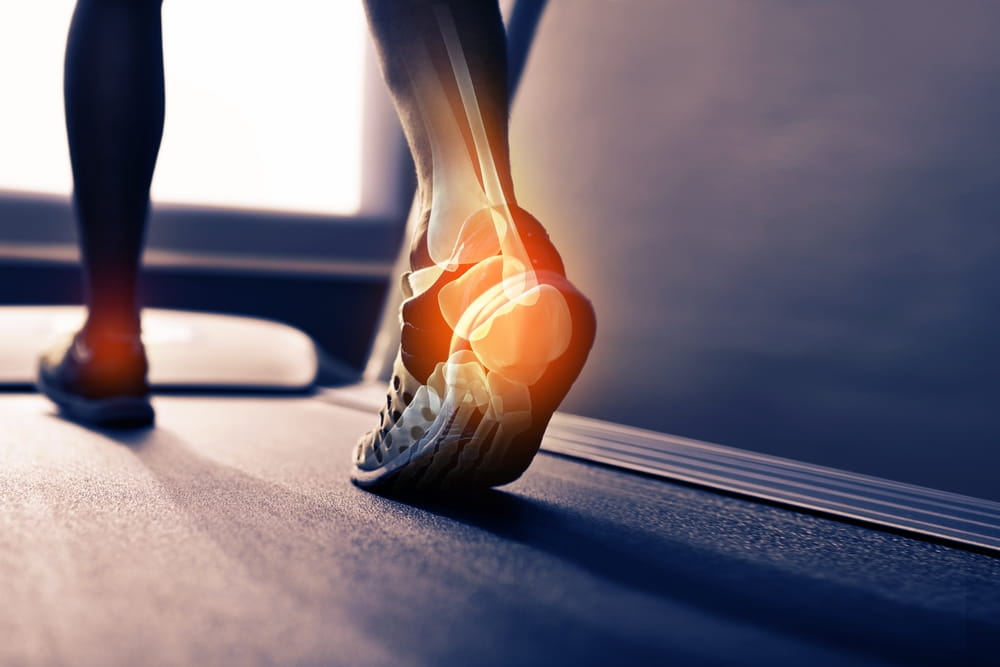
The foot adapts to the surface, helps absorb force, supports body weight, and eventually becomes more rigid as the body pushes forward into the next step. The ankle, knee, and hip continually adjust as this happens.
If motion at the foot is restricted or unusually pronounced, movement higher in the leg may also change. Those changes are not necessarily harmful, but they may become relevant when pain develops.
Research examining foot posture and lower-extremity injuries suggests that foot structure is best considered one piece of a larger biomechanical picture rather than an isolated cause of pain.
Understanding Arches and Foot Structure
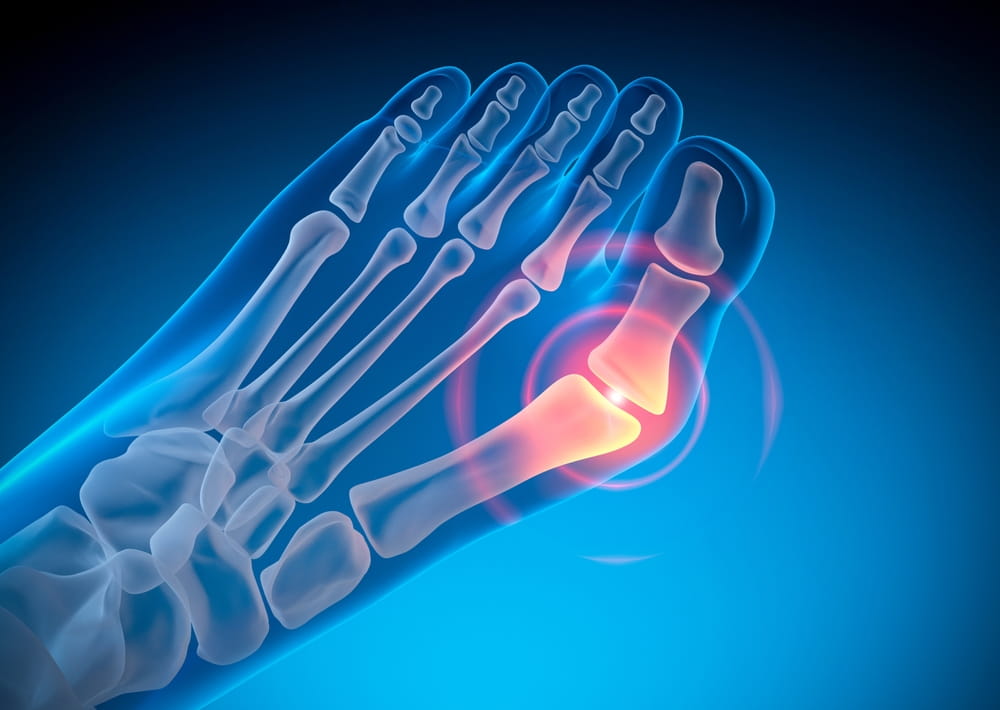
The medial arch runs along the inside of the foot and helps manage load during standing and walking.
People naturally have different arch heights. Some feet appear relatively flat when standing, while others have a more pronounced arch.
A lower arch is often associated with greater pronation, which describes a combination of movements that helps the foot adapt to the ground. A higher-arched foot may move differently and can sometimes be relatively rigid.
Neither pattern is automatically abnormal.
Static foot shape also does not always predict exactly how the foot behaves during walking or running. This is why clinicians often look at both structure and movement rather than relying only on arch appearance.
How Foot Motion Can Influence the Knee
The foot, shin, and knee are mechanically connected.
As the foot moves during a step, the tibia can rotate slightly. The knee responds to this motion while also bending to absorb force.
If the movement becomes excessive, poorly controlled, or combined with weakness elsewhere in the leg, the knee may experience a different loading pattern.
One condition often discussed in this context is patellofemoral pain, which causes discomfort around or behind the kneecap. Research has identified associations between certain foot characteristics and patellofemoral pain, although the relationship is generally modest and not strong enough to treat foot posture as the sole explanation.
Knee Pain Usually Has More Than One Contributor
It can be tempting to blame knee pain entirely on flat feet or pronation. In reality, knee discomfort often develops from several interacting factors.
Hip strength, training volume, knee alignment, previous injury, muscle flexibility, body weight, and activity demands can all affect symptoms.
For example, a runner may have a pronated foot posture for years without pain. Symptoms might only appear after mileage increases dramatically, hip strength declines, or recovery becomes inadequate.
This is why changing footwear or adding an orthotic without considering the rest of the lower extremity does not solve every case of knee pain.
The Foot and Hip Are Connected Through Movement
The connection between foot mechanics and the hip may be less obvious because the joints are farther apart.
During walking, however, rotation at the foot and lower leg can influence how the thigh moves within the hip joint. Meanwhile, muscles around the hip help control the position of the entire leg from above.
This means the relationship works in both directions.
A change at the foot may affect movement higher in the leg, but reduced hip strength can also change how the knee and foot behave when the body is bearing weight.
Rather than assuming that one joint is always causing problems in another, an evaluation looks for patterns across the entire limb.
Why Hip Strength Still Matters
Muscles around the hips help stabilize the pelvis and control rotation of the thigh.
When these muscles fatigue or lack adequate strength, the thigh may rotate or shift differently during walking, running, squatting, and stair climbing. The knee and foot then adapt to those changes.
Someone experiencing hip pain may therefore benefit from an assessment of both hip function and lower-leg mechanics.
Through dedicated hip care, clinicians can evaluate joint motion, strength, gait, and other factors that may be contributing to discomfort.
High Arches Can Create a Different Loading Pattern
Much of the discussion around foot mechanics focuses on flat feet, but high arches can also affect movement.
A relatively rigid, high-arched foot may absorb and distribute force differently from a more flexible foot. Some individuals place greater pressure along the outer portion of the foot or experience reduced adaptability when walking on uneven ground.
Higher or lower arches can also influence footwear comfort and pressure distribution.
Again, foot shape itself does not predict whether someone will develop pain. How the person moves, the activities performed, and how the rest of the leg responds are equally important.
Limited Ankle Mobility Can Affect the Entire Leg
Foot mechanics cannot be separated from ankle mobility.
As the body moves forward over the foot, the ankle must allow the lower leg to progress appropriately. If that motion is restricted, the body often finds another way to complete the step.
The foot may turn outward, the heel may rise sooner, or additional motion may occur at the knee or hip.
During squatting or stair descent, limited ankle mobility may become particularly noticeable. The person might shift weight, rotate the foot, or change knee position to continue the movement.
These compensations are not always painful, but they can become relevant when symptoms repeatedly occur during particular activities.
Footwear Can Change How the Foot Interacts With the Ground
Shoes create an interface between the foot and the walking or running surface.
Different designs influence cushioning, stability, flexibility, heel height, and the amount of room available for the toes. A shoe that feels comfortable for one person may not work well for another.
Worn footwear can also change over time. Compressed cushioning or uneven sole wear may affect comfort and stability.
There is no universal shoe that corrects every foot type. Comfort, activity demands, fit, and individual symptoms should guide footwear choices more than a label suggesting that a particular design is required for a certain arch.
Signs That Foot Mechanics May Be Worth Evaluating
Not every unusual-looking arch or walking pattern needs treatment. An evaluation becomes more useful when structure or movement appears alongside symptoms or functional limitations.
Clues may include:
- Recurring knee or hip pain during walking or exercise
- Uneven shoe wear that develops consistently
- Foot or ankle pain alongside knee symptoms
- Repeated ankle sprains or feelings of instability
- A noticeable limp or change in stride
- Pain that appears after increasing walking or running
- Difficulty maintaining balance on one leg
- Significant differences between the two feet
- Calluses that repeatedly form under the same pressure points
These findings do not prove that the foot is causing symptoms higher in the leg. They simply provide additional information for the overall assessment.
Gait Can Reveal More Than Static Posture
Looking at someone while they stand provides only part of the picture.
Gait assessment shows what happens once the body begins moving. A clinician may observe how the heel contacts the ground, how weight travels through the foot, whether the knee rotates or shifts, and how the pelvis behaves during each step.
Running, squatting, stepping down, or balancing on one leg may reveal different patterns than ordinary walking.
This dynamic information can be especially useful when symptoms occur only during exercise.
Why the Painful Joint Still Needs Its Own Evaluation
Even when foot mechanics appear unusual, pain at the knee or hip should not automatically be attributed to the foot.
Arthritis, meniscus injuries, tendon problems, cartilage irritation, bursitis, ligament injuries, and other conditions may produce symptoms independently of foot structure.
A complete examination focuses on the painful joint first while also determining whether nearby regions are affecting movement.
This approach reduces the risk of treating a visible foot characteristic while overlooking the actual source of pain.
When Ankle and Foot Care May Help
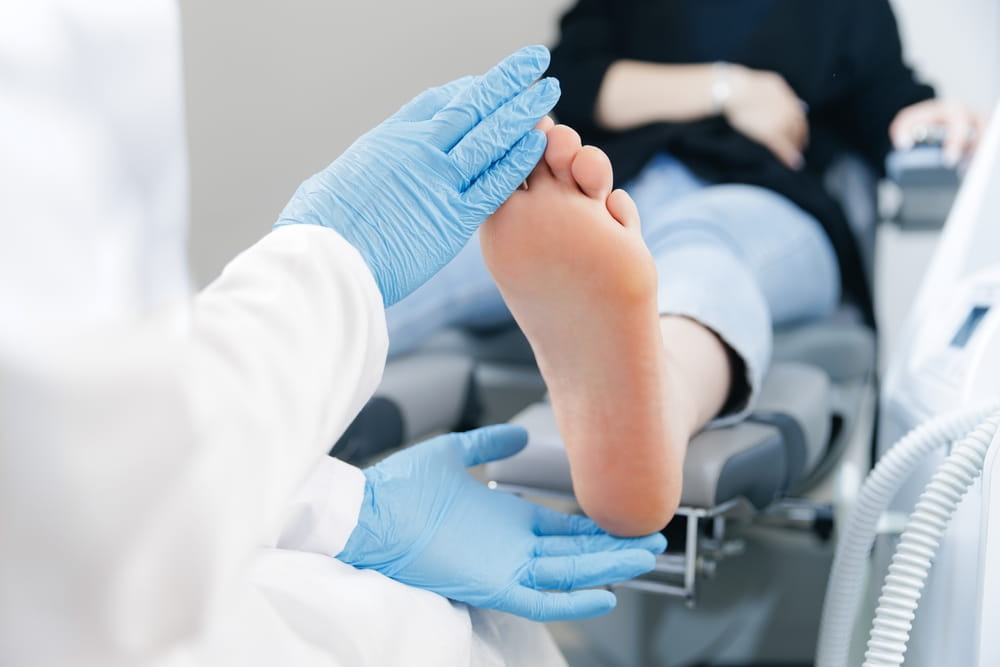
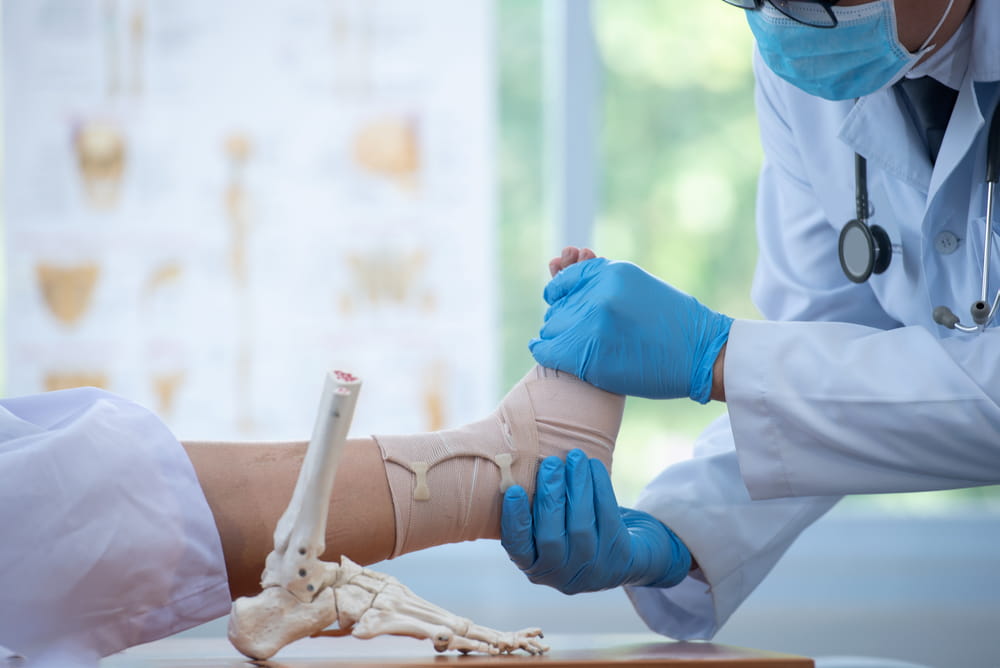
An assessment through ankle and foot care can examine arch structure, joint mobility, strength, areas of pressure, footwear, and gait.
Depending on the findings, treatment may involve strengthening, mobility exercises, activity modification, footwear adjustments, or other interventions.
Orthotics may be useful for selected patients, but they are not automatically necessary simply because a person has flat or high arches.
The decision should be based on symptoms, function, and how the individual responds rather than foot appearance alone.
The Body Adapts as a Chain
One of the most useful ways to understand lower-body mechanics is to stop thinking of each joint as an independent part.
The foot responds to the ground. The ankle guides the lower leg. The knee absorbs and transfers force. The hip controls the thigh and pelvis. Each area continually adjusts to movement elsewhere in the chain.
Research supports this interconnected view while also showing why simple conclusions should be avoided. Foot posture may contribute to certain lower-extremity problems, but observed associations are often small and injury risk remains multifactorial.
When Daily Movement Starts Telling a Different Story
Sometimes the first sign that mechanics are changing is not dramatic pain. It may be a shoe that wears differently than its mate, a knee that aches only after longer walks, or a hip that becomes tired during activities that used to feel routine.
Those details matter because they show how the body is responding to repeated load. Foot structure may be part of that story, but so may hip strength, ankle mobility, training volume, joint health, or an old injury.
At Lone Star Orthopaedic and Spine Specialists, PLLC, patients from Fort Worth, Mansfield, Burleson, and neighboring North Texas communities can have these relationships assessed as a connected movement system. The purpose is not to make every arch, knee, or stride look identical. It is to determine which factors are actually influencing comfort, then address the ones that matter so walking, exercise, and daily mobility feel more natural again.
Sources
Neal, B. S., Griffiths, I. B., Dowling, G. J., et al. (2014). Foot posture as a risk factor for lower limb overuse injury: A systematic review and meta-analysis. Journal of Foot and Ankle Research.
Chuter, V. H., & Janse de Jonge, X. A. K. (2012). Proximal and distal contributions to lower extremity injury: A review of the literature. Gait & Posture.
Barton, C. J., Levinger, P., Menz, H. B., & Webster, K. E. (2009). Kinematic gait characteristics associated with patellofemoral pain syndrome: A systematic review. Gait & Posture.