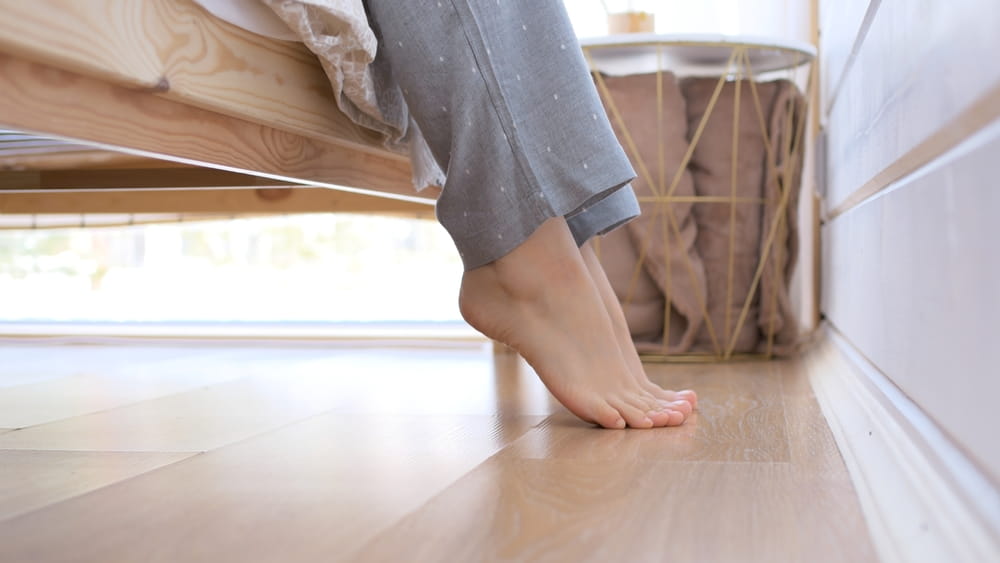
It is one of the stranger patterns in orthopedics: a foot that felt fine all night delivers a sharp jolt the moment it touches the floor. Those first steps out of bed can be the most painful of the entire day, easing only as the foot warms up and loosens with movement. The explanation lies in what happens during rest.
Overnight, the tissues along the bottom of the foot, especially the plantar fascia that supports the arch, relax and shorten slightly. The first steps of the morning stretch them abruptly back into action, and irritated tissue protests. The pattern is so distinctive that the timing of the pain is itself a clue to what is happening. Lone Star Orthopaedic and Spine Specialists, PLLC hears this exact story frequently from patients across Mansfield, Fort Worth, and Burleson, TX, and understanding the mechanics behind it is the first step toward easing it.
Why Heel Pain Often Feels Worse in the Morning
One of the unique characteristics of morning heel pain is that symptoms are often most noticeable after prolonged rest. During sleep, the foot remains relatively inactive for several hours.
While resting, muscles, tendons, and connective tissues naturally relax and shorten slightly. When standing and walking resume, these tissues are suddenly required to stretch and absorb force again.
This transition can temporarily increase tension within the foot, making the first steps of the day feel particularly uncomfortable. As movement continues, circulation increases and the tissues begin to loosen, which often reduces discomfort.
Learning more about ankle and foot care can help explain how these structures work together during daily movement.
The Role of the Plantar Fascia
One of the most commonly discussed structures associated with morning heel discomfort is the plantar fascia. This thick band of connective tissue runs along the bottom of the foot, connecting the heel to the forefoot.
The plantar fascia helps support the arch and plays an important role in absorbing force during walking and standing. Because it is active with nearly every step, it experiences substantial stress throughout the day.
When tension develops within this tissue, discomfort is often most noticeable during the first few steps after periods of rest. This pattern is one reason morning heel pain is frequently associated with irritation involving the plantar fascia.
Daily Stress on the Feet
The feet absorb significant forces every day. Walking, standing, exercising, and even routine household activities place repeated demands on the structures supporting the arch and heel.
Over time, these repetitive stresses can contribute to irritation within the muscles, tendons, and connective tissues of the foot. The effects are often gradual rather than sudden.
Many people are surprised to discover that heel discomfort may develop without a specific injury. Instead, the issue often reflects the cumulative effects of daily movement and weight-bearing activity.
How Foot Mechanics Influence Heel Comfort
Every foot distributes pressure differently. Factors such as arch height, walking mechanics, flexibility, and muscle balance can all influence how forces are absorbed.
For example, both very high arches and flatter arches may affect how stress is distributed across the heel and foot. Repetitive movement patterns can also influence which structures experience the greatest demands during activity.
Because the foot serves as the foundation for movement, even small changes in mechanics can affect long-term comfort.
Understanding broader aspects of ankle and foot conditions helps illustrate how movement patterns influence foot health.
Tight Muscles Can Contribute
The muscles and tendons of the lower leg play an important role in foot function. Tight calf muscles or reduced flexibility in the Achilles tendon can increase tension throughout the foot.
When flexibility decreases, the foot may experience additional strain during walking and standing. This can contribute to feelings of tightness and discomfort, particularly after periods of inactivity.
Maintaining flexibility throughout the lower leg often supports more efficient movement and may help reduce unnecessary stress on the heel.
Why Activity Levels Matter
Both high activity levels and prolonged inactivity can influence heel discomfort.
People who spend long hours on their feet may place repeated stress on the structures supporting the heel. At the same time, individuals with sedentary routines may experience increased stiffness due to limited movement throughout the day.
Because the body responds to both activity and recovery, finding a healthy balance is often important for maintaining foot comfort over time.
Other Areas of the Body Can Play a Role
The feet do not function independently. They work together with the ankles, knees, hips, and spine to support movement.
Changes in mobility or strength elsewhere in the body can affect how force is distributed through the feet. For example, altered walking patterns may increase stress on the heel during everyday activities.
This interconnected relationship highlights why movement quality throughout the entire lower body can influence foot comfort.
Signs Commonly Associated With Morning Heel Pain
Morning heel discomfort often follows recognizable patterns.
- Pain during the first steps after getting out of bed
- Discomfort after prolonged sitting or inactivity
- Tenderness near the bottom of the heel
- Tightness that improves with movement
- Increased soreness after long periods of standing
These symptoms may vary from person to person, but they frequently reflect how the foot responds to periods of rest and activity.
Supporting Healthy Foot Function
Maintaining healthy movement patterns and flexibility can help support overall foot function. Regular activity encourages circulation and helps keep muscles and connective tissues mobile.
Some individuals benefit from structured approaches that focus on movement quality, flexibility, and lower-extremity mechanics. Resources related to physical therapy often emphasize exercises and mobility strategies designed to support foot and ankle function.
Supportive footwear, stretching routines, and attention to movement habits may also help reduce unnecessary strain on the heel over time.
Why Those First Steps Can Reveal So Much
The morning-pain pattern carries a reassuring message inside it: heel discomfort that loosens with movement usually reflects irritated, tightened tissue rather than sudden damage, and irritated tissue responds to care. Attention to calf and foot flexibility, supportive footwear, sensible activity balance, and movement habits that distribute force more evenly can all reduce the strain that builds in the plantar fascia and surrounding structures day after day. Because the trouble typically accumulates gradually, improvement tends to follow the same timeline, rewarding consistency over quick fixes.
Persistent or worsening symptoms deserve a closer look, since foot mechanics vary from person to person and sometimes need individual evaluation. That is the kind of detective work Lone Star Orthopaedic and Spine Specialists, PLLC takes on for patients throughout Mansfield, Fort Worth, and Burleson, TX, where those telling first steps of the morning often reveal exactly what the foot needs.
Sources
Riddle, D. L., & Schappert, S. M. (2004). Volume of ambulatory care visits and patterns of care for patients diagnosed with plantar fasciitis. Journal of the American Podiatric Medical Association.
Buchbinder, R. (2004). Clinical practice: Plantar fasciitis. New England Journal of Medicine.
League, A. C. (2008). Current concepts review: Plantar fasciitis. Foot & Ankle International.