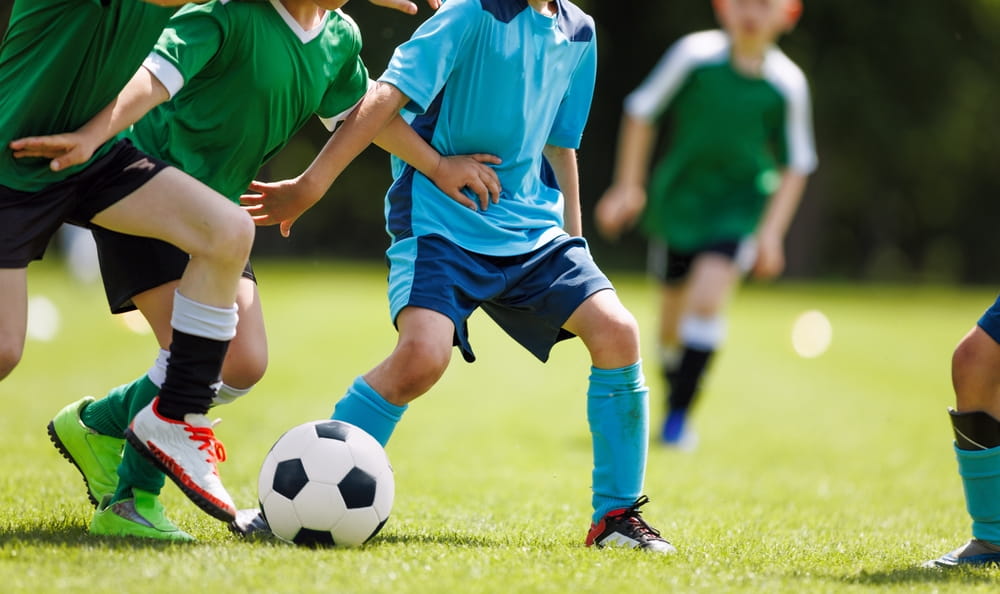
Quick changes in direction can be some of the most demanding moments in sports. An athlete may need to accelerate toward the ball, stop abruptly, avoid another player, and redirect the body within seconds. These movements require more than speed. They depend on balance, coordination, strength, body awareness, and the ability to react without losing control.
Agility training helps athletes practice these demands in a structured environment. Drills may involve cutting, shuffling, pivoting, accelerating, decelerating, or responding to visual and verbal cues. When performed with appropriate technique and progression, this type of training can improve the way the body manages sudden forces during athletic activity.
Athletes in Mansfield, Fort Worth, Burleson, and throughout North Texas participate in sports that require rapid reactions and frequent directional changes. Lone Star Orthopaedic and Spine Specialists, PLLC helps athletes understand how movement quality, conditioning, and preparation can contribute to both performance and injury prevention.
Agility Is More Than Moving Quickly
Agility is often described as the ability to change direction rapidly, but speed is only one part of the skill. Effective agility also requires the athlete to remain balanced, maintain control of the trunk and lower body, and respond appropriately to what is happening on the field or court.
A player may be fast in a straight line but struggle to stop safely or redirect without allowing the knee, hip, or ankle to move into a vulnerable position. Agility training addresses these transitions rather than focusing only on maximum running speed.
Good agility involves coordinated action throughout the body. The feet establish contact with the ground, the ankles help absorb and redirect force, the knees and hips control alignment, and the core stabilizes the trunk. When these areas work together efficiently, the athlete is better prepared to respond to unpredictable situations.
How Reaction Time Relates to Injury Risk
Many sports injuries occur when an athlete has little time to prepare. A defender changes direction unexpectedly, another player enters the athlete’s path, or the ball takes an unusual bounce. The athlete must process the situation and move almost immediately.
Agility drills can challenge this decision-making process. Instead of following the same rehearsed pattern every time, athletes may respond to a coach’s signal, a partner’s movement, or a changing target. These reactive drills more closely resemble the uncertainty of competition.
Faster reactions alone do not guarantee safety. The goal is to develop reactions that are both quick and controlled. An athlete who responds rapidly but lands off balance or cuts with poor alignment may still place unnecessary stress on the joints.
Training the nervous system and muscles to coordinate movement under changing conditions can help athletes respond more efficiently when a play does not unfold as expected.
Improving Deceleration and Stopping Mechanics
Accelerating receives a great deal of attention in sports training, but the ability to slow down may be equally important. Deceleration requires the body to absorb substantial force, often within a short distance.
When an athlete stops suddenly, the hips, knees, ankles, and surrounding muscles must control momentum. If the athlete remains too upright, takes an awkward final step, or allows the knees to collapse inward, the joints may experience greater stress.
Agility training provides opportunities to practice slowing down with better control. Athletes can learn to lower their center of gravity, use several controlled steps rather than one abrupt stop, and keep the lower extremities aligned as speed decreases.
These skills are particularly relevant in basketball, soccer, football, tennis, volleyball, and other activities involving frequent starts and stops. However, deceleration control also matters in recreational exercise and everyday movement.
Supporting Better Cutting Technique
Cutting occurs when an athlete plants a foot and changes direction. This action places significant demands on the planted leg because it must support the body while redirecting momentum.
The position of the foot, knee, hip, and trunk can affect how force travels through the leg. A rushed or poorly controlled cut may place the joint in a less favorable position, especially when the athlete is fatigued or reacting to another player.
Structured agility drills allow athletes to practice cutting mechanics before using them at full competitive speed. Coaches and rehabilitation professionals can observe movement patterns and help athletes make adjustments to foot placement, trunk position, knee control, and stride length.
The objective is not to make every athlete move identically. Body type, sport, position, and previous injuries all influence movement. Training should help each athlete develop a more controlled and efficient strategy.
Balance and Body Awareness During Movement
Balance is not limited to standing on one leg. In sports, athletes must maintain stability while running, landing, reaching, being bumped, or changing direction.
Agility training challenges dynamic balance, which is the ability to remain controlled while the body is moving. Repeated practice may improve an athlete’s awareness of where the body is positioned and how it is responding to the ground.
This awareness is sometimes called proprioception. It helps the nervous system recognize joint position and coordinate quick muscular responses. Strong proprioceptive control can be especially valuable when an athlete lands unexpectedly or steps on an uneven surface.
Through sports medicine care, athletes can receive guidance related to training demands, movement concerns, injury recovery, and preparation for a safe return to activity.
Agility Training and Neuromuscular Control
Neuromuscular control refers to how effectively the nervous system coordinates muscular action. Every athletic movement depends on signals traveling between the brain, nerves, and muscles.
Agility exercises can challenge this system by requiring multiple actions to occur quickly. An athlete may need to see a cue, choose a direction, stabilize the trunk, position the foot, and produce enough force to move—all within a brief moment.
Repeated exposure to these tasks can make movement patterns more familiar. The athlete may become better able to recruit the appropriate muscles at the appropriate time instead of relying on slower or less coordinated responses.
Research on neuromuscular injury-prevention programs suggests that programs incorporating agility, balance, strength, and landing exercises can help reduce certain sports-related injuries, particularly when athletes participate consistently and use proper technique.
Why Strength Still Matters
Agility should not be treated as a replacement for strength training. The ability to change direction safely depends partly on whether the muscles can control the forces involved.
Strong hips help stabilize the pelvis and support lower-extremity alignment. The quadriceps and hamstrings help control the knees, while the calf muscles and muscles surrounding the ankle contribute to balance and push-off. Core strength helps the athlete maintain trunk control during rapid movement.
An athlete who practices fast cutting drills without adequate strength may repeat movement patterns that the body is not yet prepared to control. A well-rounded program therefore combines agility with strength, mobility, balance, conditioning, and recovery.
The best exercise selection depends on the athlete’s age, sport, training experience, current fitness level, and injury history.
The Importance of Landing Mechanics
Many agility exercises include hops, bounds, or jumps. These activities can help athletes practice producing and absorbing force, but landing technique should remain a priority.
A controlled landing typically involves bending at the hips, knees, and ankles rather than keeping the legs stiff. The athlete should also maintain balance and avoid allowing the knees or trunk to move excessively out of alignment.
Landing practice may begin with simple two-foot exercises before progressing to single-leg movements, multidirectional jumps, or reactive tasks. Progressing too quickly can reduce technique quality and create fatigue before the athlete has developed adequate control.
When agility training is supervised, feedback can help athletes recognize habits that may be difficult to notice on their own.
Key Elements of a Well-Designed Agility Program
Agility training is most useful when it matches the athlete rather than relying on random drills. A thoughtful program may include:
- A dynamic warm-up that prepares the muscles and joints for faster movement
- Progressive drills that move from planned patterns to reactive situations
- Practice accelerating, stopping, cutting, shuffling, and changing direction
- Attention to foot placement, knee alignment, trunk control, and balance
- Adequate rest so fatigue does not repeatedly compromise technique
- Exercises that reflect the athlete’s sport, position, and level of competition
- Strength, mobility, balance, and recovery work alongside agility practice
Quality generally matters more than completing as many repetitions as possible. Once fatigue causes technique to deteriorate, continuing at the same intensity may reinforce poor movement habits.
Planned Drills Versus Reactive Drills
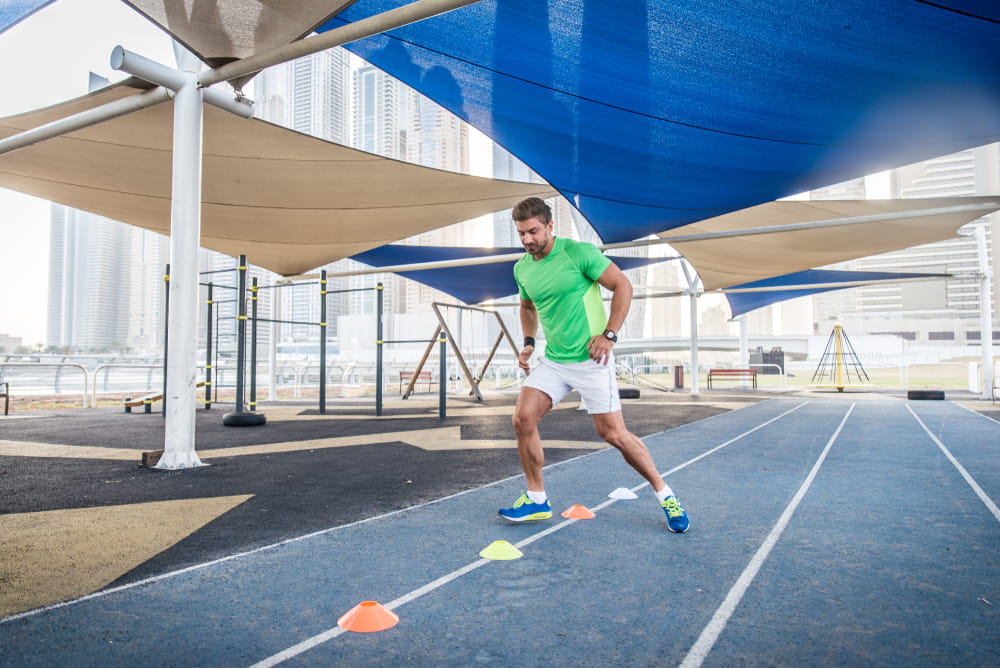
Planned agility drills follow a known route. Cone patterns, ladder drills, and rehearsed cutting sequences are common examples. These exercises can help athletes learn footwork and positioning in a controlled setting.
Reactive drills add uncertainty. The athlete may not know which direction to move until a signal appears. This requires perception, decision-making, and physical execution to occur together.
Both types of drills can be useful. Planned exercises are often appropriate when learning a new technique, while reactive exercises may be added after the athlete demonstrates consistent control.
Reactive drills can better reflect the demands of competition, but they should not be introduced before the athlete is ready. Unpredictability increases the physical and cognitive challenge of the movement.
Adjusting Training for Age and Experience
Younger athletes do not need adult-level drills or heavy workloads to benefit from agility training. At early stages, training may resemble structured play and focus on coordination, balance, body awareness, and basic movement skills.
As athletes mature, exercises can gradually become faster, more complex, and more specific to their sport. Competitive athletes may incorporate decision-making, opponent-based cues, or drills that mimic common game situations.
Beginners should not be expected to move at maximum speed before they understand the movement pattern. Slowing a drill down can allow the athlete to develop control before intensity is increased.
A program should also account for growth, training volume, and other sports commitments. Adolescents experiencing rapid growth may temporarily feel less coordinated and may benefit from additional attention to fundamental mechanics.
Using Agility Training During Rehabilitation
Agility exercises may also be incorporated into rehabilitation after an injury. However, returning to cutting and reactive movement should occur only after the athlete has regained appropriate strength, mobility, balance, and control.
Early rehabilitation may focus on pain management, range of motion, and basic strength. Later stages can introduce jogging, controlled stopping, planned directional changes, and eventually more demanding sport-specific movements.
Through individualized physical therapy, an athlete’s progress can be evaluated before additional speed or complexity is added. This progression helps bridge the gap between basic rehabilitation exercises and the unpredictable demands of practice or competition.
Agility performance should not be judged by speed alone during recovery. Symmetry, confidence, control, and the athlete’s response after training are also important considerations.
Fatigue Can Change Movement Quality
Athletes do not compete only when fully rested. As a game or practice continues, fatigue can affect coordination, reaction time, posture, and joint control.
For this reason, athletes eventually need to maintain safe mechanics under realistic levels of exertion. However, repeatedly practicing complex drills while extremely fatigued can also increase risk and reinforce poor habits.
Training should be progressed carefully. An athlete might first demonstrate a movement while fresh, then perform it after a moderate conditioning task once the technique is consistent.
Rest days, hydration, sleep, nutrition, and overall workload all influence how well the body responds. Lifestyle guidance can help athletes recognize that injury prevention extends beyond a single drill or workout.
Agility Training Does Not Prevent Every Injury
No training method can eliminate sports injuries. Contact with another athlete, awkward falls, playing surfaces, equipment, previous injuries, and unpredictable events can all contribute to injury risk.
Agility training is most effective as part of a broader prevention strategy. Strength training, appropriate warm-ups, gradual workload increases, proper equipment, recovery, and attention to pain all remain important.
Athletes should also avoid treating discomfort as something that must always be ignored. Persistent pain, swelling, instability, weakness, or reduced performance may indicate that the body needs evaluation rather than additional training.
Moving With Speed and Control
The value of agility training is not simply that it makes athletes faster. Its greater benefit may be teaching the body to manage speed with control. Practicing acceleration, deceleration, balance, cutting, and reactive movement can prepare athletes for the rapid decisions required during competition.
Consistent, well-designed training can help improve movement mechanics and neuromuscular coordination, but drills should be appropriate for the athlete’s abilities and performed with attention to technique. Increasing complexity before establishing control may work against the purpose of the program.
From school athletics in Mansfield and Burleson to recreational and competitive sports throughout Fort Worth and North Texas, athletes benefit from preparation that reflects the true demands of their activities. Lone Star Orthopaedic and Spine Specialists, PLLC supports athletes in building healthier movement patterns, addressing injuries, and returning to the sports they enjoy with greater strength and confidence.
Sources
Emery, C. A., et al. (2015). Neuromuscular training injury prevention strategies in youth sport: A systematic review and meta-analysis. British Journal of Sports Medicine.
Steib, S., Rahlf, A. L., Pfeifer, K., & Zech, A. (2017). Dose-response relationship of neuromuscular training for injury prevention in youth athletes: A meta-analysis. Frontiers in Physiology.
Emery, C. A., et al. (2020). Implementing a junior high school-based programme to reduce sports injuries through neuromuscular training. British Journal of Sports Medicine.