Ask most people where their knee pain comes from and they will point directly at the knee. That answer is rarely wrong, but it is often incomplete. The knee sits in the middle of a mechanical chain that runs from the foot through the hip, and it responds to everything happening above and below it. A hip that cannot control the thigh, an ankle that lacks mobility, or a foot that rolls in during each step can all send the knee into positions it was not designed to sustain through thousands of daily repetitions.
This is what makes knee alignment worth understanding beyond whether the legs look straight in the mirror. Static appearance while standing tells only part of the story. The more revealing picture emerges during movement, when everything from muscle fatigue to footwear to a healed ankle sprain shapes how the knee actually tracks. Patients from Mansfield, Fort Worth, and Burleson, TX, bring these kinds of complaints to Lone Star Orthopaedic and Spine Specialists, PLLC regularly, and the evaluation almost always starts by watching the whole leg move rather than examining just the painful joint.
What Does Knee Alignment Mean?
The knee sits between the hip and ankle, forming part of a larger mechanical chain. Ideally, the muscles and joints work together to keep the leg controlled as weight moves through it.
Static alignment refers to the position of the leg while a person is standing still. Some people naturally have knees that angle slightly inward or outward. These structural differences do not automatically cause pain or require treatment.
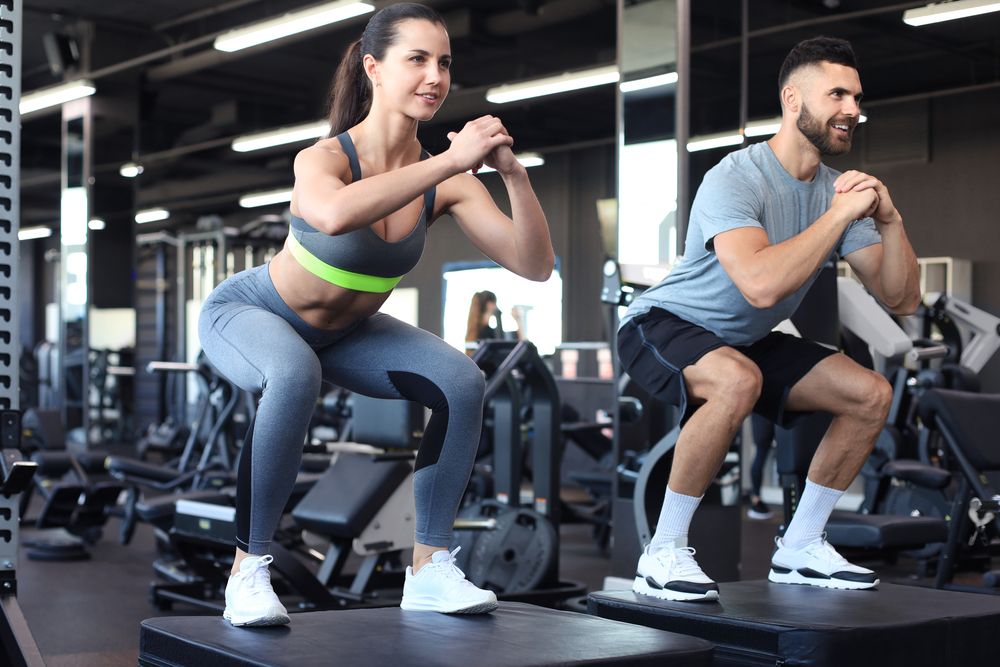
Dynamic alignment describes what happens during movement. A knee may appear well positioned while standing but shift inward, rotate, or become unstable during walking, squatting, landing, or stepping down.
Movement quality depends on more than bone structure. Strength, balance, flexibility, coordination, previous injuries, foot mechanics, fatigue, and activity level can all affect how the knee tracks.
How the Knee Handles Everyday Forces
The knee bends and straightens, but it also manages small amounts of rotation as the body moves. The joint must support body weight while muscles absorb and redirect force.
Walking generally places less demand on the knee than running, jumping, or deep squatting. Even so, everyday movements are repeated many times. A small mechanical issue may become more noticeable after thousands of steps, frequent stair use, or long periods on the feet.
The knee also experiences different forces depending on speed, surface, footwear, and the direction of movement. A sudden turn or uneven step requires more rapid muscular control than walking straight ahead on level ground.
Patients experiencing persistent discomfort can seek specialized knee care to determine whether symptoms are related to alignment, arthritis, a previous injury, instability, or another condition.
Walking and Knee Alignment
During walking, body weight shifts from one leg to the other. The foot contacts the ground, the knee bends slightly to absorb force, and the hip and ankle help propel the body forward.
If the knee repeatedly moves inward or outward, pressure may be distributed unevenly across the joint. A person may also shorten one step, lean the trunk, rotate the foot, or favor the opposite side to avoid discomfort.
These compensations can be subtle. Someone may not realize that their gait has changed until another person notices a limp or until pain develops elsewhere.
A temporary change in walking after an injury is common. A persistent altered gait, however, can place additional demands on the opposite knee, hips, ankles, or lower back.
Why Stairs Can Reveal Alignment Problems
Stair climbing requires greater knee bending and muscle effort than level walking. Going downstairs can be especially demanding because the quadriceps must control the body as it lowers.
If hip or thigh muscles cannot adequately control the leg, the knee may drift inward during the step. This can affect how the kneecap moves and may increase discomfort at the front or sides of the knee.
People with alignment or strength concerns may notice:
- Pain while going up or down stairs
- The knee moving inward during a step
- Difficulty controlling the descent
- A feeling that the knee may buckle
- Clicking or grinding around the kneecap
- Greater discomfort after repeated stair use
- Reliance on a railing or the opposite leg
These experiences do not identify one specific diagnosis. An examination is needed to determine whether the symptoms involve the kneecap, cartilage, tendons, ligaments, arthritis, muscle weakness, or another source.
The Role of the Hips
Hip strength is closely connected to knee control. Muscles around the hips stabilize the pelvis and help position the thigh during weight-bearing activities.
When these muscles are weak, fatigued, or poorly coordinated, the thigh may rotate inward. This can cause the knee to follow the same direction during walking, running, squatting, or stepping down.
The knee may be where pain is felt, but the contributing movement pattern can begin higher in the leg. This is why knee rehabilitation often includes exercises for the hips and trunk rather than focusing exclusively on the painful joint.
The Role of the Feet and Ankles
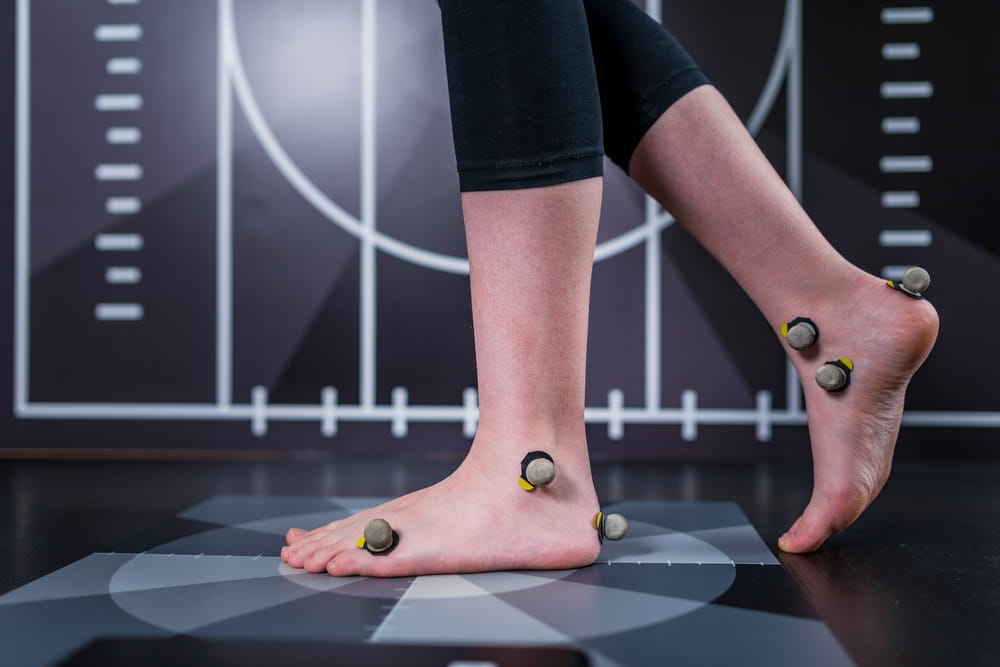
The position and motion of the feet can also influence the knees. As the foot contacts the ground, it adapts to the surface and helps absorb impact.
If ankle mobility is limited, the body may compensate by rotating the foot, lifting the heel early, or allowing the knee to shift. Foot structure, footwear, and previous ankle injuries may also affect this process.
This does not mean that every foot variation causes knee pain. Human movement differs naturally from one person to another. The concern is whether a particular pattern is associated with pain, instability, reduced function, or uneven loading.
Kneecap Tracking and Front-of-Knee Pain
The kneecap, or patella, moves within a groove at the end of the thighbone as the knee bends and straightens. Its motion is influenced by joint anatomy and the forces produced by surrounding muscles and tissues.
Changes in hip control, muscle strength, flexibility, or training volume may affect how force is distributed around the kneecap. Pain may become noticeable during stairs, squats, lunges, running, or prolonged sitting.
A person may describe aching at the front of the knee, a feeling of pressure behind the kneecap, or discomfort after sitting with the knee bent. Although alignment may contribute, front-of-knee pain usually involves several interacting factors rather than one visible abnormality.
Arthritis and Leg Alignment
Arthritis can change how a knee moves and bears weight. As cartilage deteriorates, the space between the bones may narrow more on one side of the joint than the other.
This uneven wear can contribute to a more bowed or knock-kneed appearance in some people. In turn, altered alignment may affect how pressure travels through the knee during walking and standing.
Symptoms may include stiffness, swelling, reduced motion, aching with weight-bearing, or difficulty with stairs. However, the appearance of the knee alone does not determine how much pain a person will experience.
Treatment decisions should consider symptoms, function, examination findings, activity goals, and imaging rather than alignment alone.
Previous Injuries Can Change Movement
Ligament, meniscus, cartilage, and muscle injuries can alter the way a person uses the leg. Even after the injured tissue heals, weakness or hesitation may remain.
Someone recovering from knee pain may avoid fully bending the joint, place less weight on the affected leg, or move more slowly. These protective strategies are understandable, but they can persist after they are no longer necessary.
Previous ankle or hip injuries may also influence knee mechanics. A comprehensive evaluation considers the entire lower extremity instead of examining only the location of pain.
Can Exercise Improve Dynamic Alignment?
Structural alignment cannot always be changed through exercise, nor does it necessarily need to be. Dynamic control, however, can often improve.
Rehabilitation may focus on hip and thigh strength, ankle mobility, balance, coordination, and task-specific movement. A therapist may observe how the patient walks, squats, steps, or performs activities related to work or sports.
Through individualized physical therapy, patients can practice movement patterns that reduce symptoms and improve control. Exercises are generally progressed according to the person’s strength, comfort, and functional goals.
The objective is not to force every knee into one supposedly perfect position. It is to help the patient move efficiently and confidently without unnecessary strain.
When Knee Alignment Should Be Evaluated
Occasional soreness after unusual activity may improve with temporary activity modification. Persistent or worsening symptoms deserve closer attention.
An orthopaedic evaluation may be appropriate when knee pain affects walking, stairs, work, exercise, or sleep. Swelling, locking, buckling, significant stiffness, or difficulty bearing weight are also reasons to seek care.
Sudden deformity or inability to walk after an injury requires more urgent assessment. These symptoms may indicate a fracture, dislocation, or significant soft-tissue injury rather than a gradual alignment concern.
What a Knee Examination May Involve
A clinician may begin by asking when symptoms started, whether an injury occurred, and which activities make the pain better or worse.
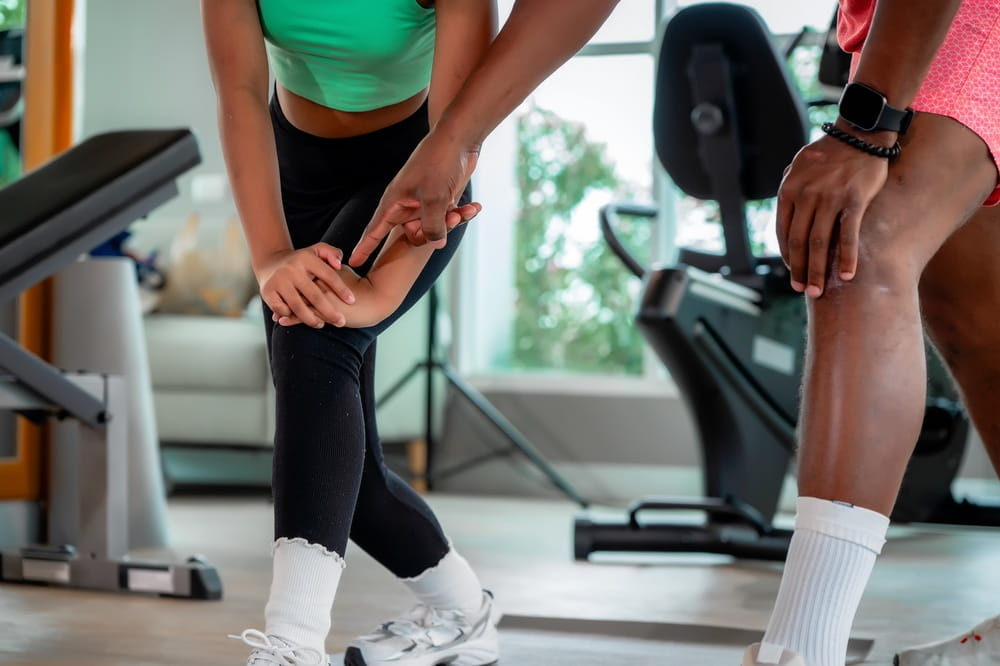
The examination may include assessing standing alignment, walking pattern, range of motion, muscle strength, joint stability, kneecap movement, and areas of tenderness. The hips, ankles, and feet may also be evaluated.
X-rays can help identify arthritis, fractures, and structural alignment changes. MRI or other imaging may be considered when ligament, meniscus, cartilage, or tendon damage is suspected.
Not every patient needs advanced imaging. The history and physical examination often help determine which tests, if any, are appropriate.
Supporting Healthier Knee Movement
Movement habits can influence how the knees feel over time. Gradually increasing activity, using appropriate footwear, allowing recovery, and maintaining strength throughout the lower body may help reduce unnecessary strain.
Changes should be based on individual needs rather than generic instructions to keep the knees perfectly straight. The best strategy depends on the cause of the symptoms, the person’s anatomy, and the activities they want to perform.
Broader lifestyle guidance may also help patients consider recovery, activity progression, body weight, sleep, and other factors that affect joint health.
Looking Beyond the Position of the Knee
Knee pain during walking, stairs, or squatting is rarely caused by one thing working in isolation. The joint absorbs the consequences of everything happening around it: how well the hips are stabilizing the pelvis, how freely the ankle is moving, whether the foot is distributing impact evenly, and how fatigue is changing all of those patterns as the day goes on. That complexity is actually good news, because it means there are usually multiple entry points for improvement.
Strengthening the hip and thigh, restoring ankle mobility, addressing footwear, and practicing task-specific movement can all shift how force travels through the knee without anyone needing to force it into a theoretically perfect position. The goal is efficient, comfortable movement that fits the person’s anatomy and daily demands, not conformity to a textbook diagram. For people across Mansfield, Fort Worth, and Burleson, TX, Lone Star Orthopaedic and Spine Specialists, PLLC brings that whole-leg perspective to knee evaluation, connecting what hurts with how the body is actually moving to find a plan that holds up in real life.
Sources
Bennell, K. L., Bowles, K. A., Wang, Y., Cicuttini, F., Davies-Tuck, M., & Hinman, R. S. (2011). Higher dynamic medial knee load predicts greater cartilage loss over 12 months in medial knee osteoarthritis. Annals of the Rheumatic Diseases.
Farrokhi, S., O’Connell, M., Gil, A. B., Sparto, P. J., & Fitzgerald, G. K. (2015). Altered gait characteristics in individuals with knee osteoarthritis and self-reported knee instability. Journal of Orthopaedic & Sports Physical Therapy.
Kutzner, I., Heinlein, B., Graichen, F., et al. (2010). Loading of the knee joint during activities of daily living measured in vivo in five subjects. Journal of Biomechanics.