Finger pain does not always begin with a jammed joint, fall, or obvious accident. Sometimes an ache appears gradually while typing, opening jars, holding a phone, or performing other routine tasks. The joint may feel stiff in the morning, become swollen after activity, or hurt only during certain movements.
Because the fingers contain several small joints, tendons, ligaments, nerves, and supporting tissues, discomfort can develop for many reasons. Arthritis is one possibility, but repetitive use, tendon irritation, joint inflammation, and other conditions can produce similar symptoms.
Lone Star Orthopaedic and Spine Specialists, PLLC evaluates hand and finger concerns for patients throughout Fort Worth, Mansfield, Burleson, and surrounding North Texas communities. Looking at which joints hurt, when symptoms occur, and what other changes accompany the pain can help narrow the possible causes.
Why Finger Joints Can Hurt Without Trauma
Each finger contains multiple joints that allow the hand to bend, straighten, grip, pinch, and perform fine movements. These joints are used constantly throughout the day, often without much thought.
Even without a specific injury, tissues surrounding a joint can become irritated. Repetition, age-related joint changes, inflammation, stiffness, and altered tendon movement can all contribute.
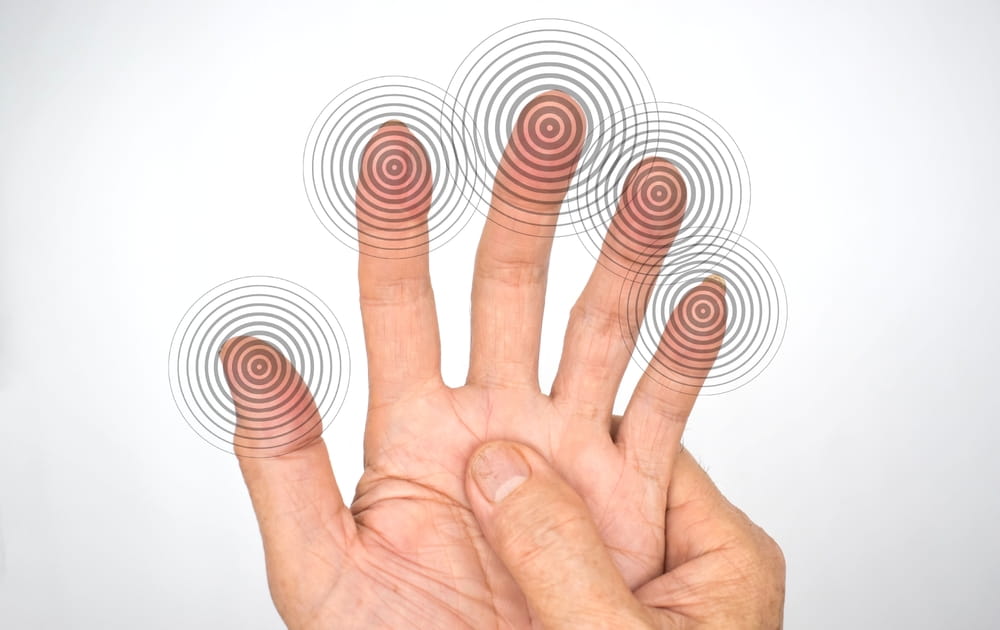
The pattern matters. Pain concentrated near the fingertip may have a different explanation from discomfort at the middle joint or where a finger meets the hand. One painful finger also raises different considerations than symmetrical symptoms affecting several fingers on both hands.
Specialized wrist and hand care can help determine whether the source appears to be the joint itself or one of the surrounding structures.
Osteoarthritis in the Fingers
Osteoarthritis is a common cause of finger joint pain, particularly with increasing age. It develops as cartilage and other tissues within a joint change over time.
Hand osteoarthritis commonly affects the joints closest to the fingernails, the middle finger joints, and the joint at the base of the thumb. Symptoms may include aching, stiffness, tenderness, reduced motion, or swelling.
Some people develop firm bony enlargements around affected finger joints. These changes may occur gradually and can make tasks requiring precise grip more difficult.
Osteoarthritis pain may become more noticeable after repetitive use, although stiffness can also occur after periods of inactivity.
Inflammatory Arthritis Can Affect the Hands
Not all arthritis is caused by degenerative joint changes.
Rheumatoid arthritis and psoriatic arthritis are inflammatory conditions that can affect the hands and fingers. These disorders involve immune-system activity that creates inflammation within or around joints.
Inflammatory arthritis may cause swelling, warmth, tenderness, and prolonged stiffness. Rheumatoid arthritis often affects multiple joints and may involve similar joints on both hands. Psoriatic arthritis can sometimes produce swelling throughout an entire finger and may occur with psoriasis or changes to the nails.
Finger symptoms alone cannot confirm inflammatory arthritis. When the pattern raises concern, additional medical evaluation and laboratory testing may be appropriate.
Tendon Problems Can Feel Like Joint Pain
Pain near a finger joint does not necessarily originate inside the joint.
Tendons connect muscles to bone and allow the fingers to bend and straighten. When a tendon or its surrounding sheath becomes irritated, discomfort may be felt close enough to a joint that patients assume the joint itself is responsible.
Trigger finger is one example. In this condition, the tendon that bends the finger does not glide smoothly through its surrounding pulley system. A person may notice tenderness near the base of the finger, stiffness, clicking, catching, or temporary locking.
Symptoms can be especially noticeable in the morning or after periods of inactivity.
Repetitive Hand Use and Irritation
Hands are exposed to repeated stress during computer work, cooking, construction, gardening, crafting, sports, and many hobbies.
Repetition does not automatically damage finger joints. However, a sudden increase in activity or prolonged use without adequate recovery can irritate surrounding muscles and tendons.
Grip intensity matters as well. Holding tools, weights, or other objects tightly for long periods requires sustained muscular effort. Fatigue may eventually alter how forces are distributed through the hand.
Reducing the aggravating activity temporarily may help clarify whether repetitive loading is contributing to symptoms.
Joint Stiffness After Inactivity
Some finger conditions become especially noticeable after the hand has been still.
A person may wake with stiff fingers or notice difficulty making a fist after sitting for a long period. Gentle movement may gradually improve the sensation.
The length and severity of stiffness can provide useful clues during an evaluation. Brief stiffness after inactivity may occur with osteoarthritis, while prolonged morning stiffness can be associated with inflammatory conditions.
Because these patterns overlap, stiffness should be considered alongside swelling, joint distribution, medical history, and other symptoms.
Swelling Changes the Picture
Swelling can help distinguish simple fatigue from a more significant joint or tendon problem.
A visibly enlarged finger joint may reflect arthritis, inflammation, fluid accumulation, or irritation of tissues surrounding the joint. Persistent swelling may also make rings feel tighter or reduce the ability to fully bend the finger.
Redness and warmth are especially important when they develop suddenly. In some situations, these symptoms can reflect significant inflammation or infection and should not be ignored.
When symptoms are unclear, orthopaedic imaging may help identify joint changes, fractures that were not initially recognized, or other structural concerns.
Could an Old Injury Be Responsible?
Not every relevant injury is recent.
A finger that was fractured, dislocated, or severely sprained years earlier may develop stiffness or arthritis later. Some people forget about childhood sports injuries until symptoms begin in adulthood.
An old ligament injury can also alter joint stability or mechanics, potentially changing how pressure is distributed during gripping.
This history is useful during an examination, even when the finger seemed to heal normally at the time.
Nerve Symptoms May Be Mistaken for Joint Pain
Nerve problems can create unusual sensations in the fingers, including burning, tingling, numbness, or aching.
Carpal tunnel syndrome commonly affects the thumb, index finger, middle finger, and part of the ring finger. Ulnar nerve problems may affect the little finger and part of the ring finger.
A pinched nerve in the neck can also produce symptoms farther down the arm and into the hand.
When pain is accompanied by altered sensation or weakness, the evaluation may extend beyond the finger joints to include the wrist, elbow, and neck.
What Symptom Patterns Are Helpful to Notice?
Before an appointment, paying attention to how finger pain behaves can provide useful information.
Helpful details include:
- Which finger and joint are affected
- Whether symptoms involve one or both hands
- How long morning stiffness lasts
- Whether the joint looks swollen or feels warm
- Activities that consistently trigger pain
- Clicking, catching, or locking of a finger
- Numbness, tingling, or burning
- Changes in grip strength or coordination
- Any previous hand or finger injuries
These observations cannot diagnose the problem, but they can help guide the examination.
How Finger Joint Pain Is Evaluated
An orthopaedic evaluation typically begins with a discussion of when the pain started and how it affects daily activities.
The clinician may inspect the hands for swelling, joint enlargement, skin changes, deformity, or muscle loss. Each finger may be moved to assess flexibility, tenderness, stability, tendon function, and strength.
X-rays can show arthritis, bone changes, joint alignment, or evidence of an old injury. Other imaging may be appropriate when a tendon, ligament, or other soft tissue is suspected.
When symptoms suggest rheumatoid arthritis, psoriatic arthritis, gout, or another systemic condition, blood testing or referral to another specialist may also be appropriate.
Treatment Depends on What Is Causing the Pain
Treatment for finger pain is based on the underlying condition rather than the symptom alone.
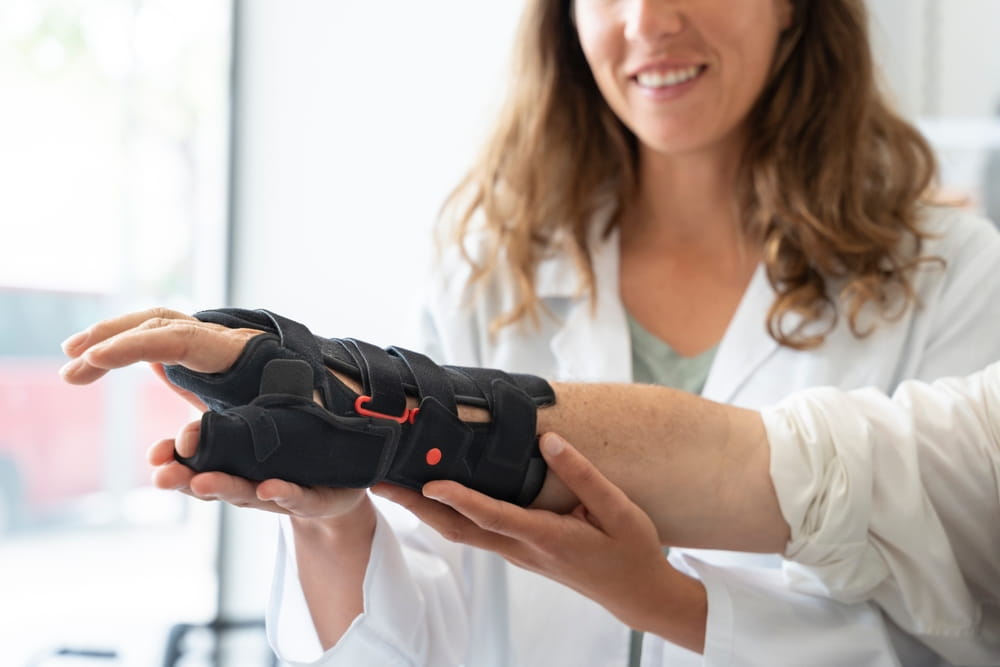
Temporary activity modification may help when repetitive use is aggravating the hand. Splints can sometimes support a painful or irritated joint, although prolonged immobilization may contribute to stiffness if it is not medically necessary.
Medication or injections may be considered for certain inflammatory or arthritic conditions. Trigger finger and other tendon problems have their own treatment approaches.
When reduced motion, weakness, or difficulty using the hand develops, physical therapy or hand-focused rehabilitation may help restore mobility, strength, and function.
Surgery is generally reserved for specific conditions when symptoms are severe, structural damage is significant, or appropriate nonsurgical treatment has not provided adequate relief.
When Finger Pain Should Be Evaluated
Mild soreness that follows unusual hand activity and resolves quickly may not require medical attention.
Evaluation becomes more important when pain repeatedly returns, persists for several days, or interferes with writing, gripping, dressing, cooking, or work. Increasing stiffness, visible joint changes, persistent swelling, or loss of motion should also be assessed.
Redness, warmth, rapidly increasing swelling, fever, or severe unexplained pain may require more prompt medical attention. Sudden weakness or significant numbness should also be evaluated.
Looking Beyond the Lack of an Injury
Finger joint pain can develop gradually even when there was no memorable accident. Osteoarthritis, inflammatory joint disease, tendon irritation, repetitive loading, old injuries, and nerve problems can all produce discomfort that interferes with ordinary hand use.
The pattern often provides the most useful starting point. Which joints hurt, how long stiffness lasts, whether swelling is present, and whether symptoms include catching or numbness can help distinguish among several possible causes.
For patients in Fort Worth, Mansfield, Burleson, and surrounding North Texas communities, Lone Star Orthopaedic and Spine Specialists, PLLC provides evaluation and treatment for hand and finger problems that make everyday tasks more difficult. Identifying what is driving the pain can help patients move beyond guesswork and toward a treatment plan suited to the condition and their daily needs.
Sources
Kloppenburg, M., Kroon, F. P. B., Blanco, F. J., et al. (2019). 2018 update of the EULAR recommendations for the management of hand osteoarthritis. Annals of the Rheumatic Diseases.
Marshall, M., Watt, F. E., Vincent, T. L., & Dziedzic, K. (2018). Hand osteoarthritis: Clinical phenotypes, molecular mechanisms and disease management. Nature Reviews Rheumatology.
Huisstede, B. M. A., Hoogvliet, P., Coert, J. H., Fridén, J., & European HANDGUIDE Group. (2014). Multidisciplinary consensus guideline for managing trigger finger: Results from the European HANDGUIDE Study. Physical Therapy.