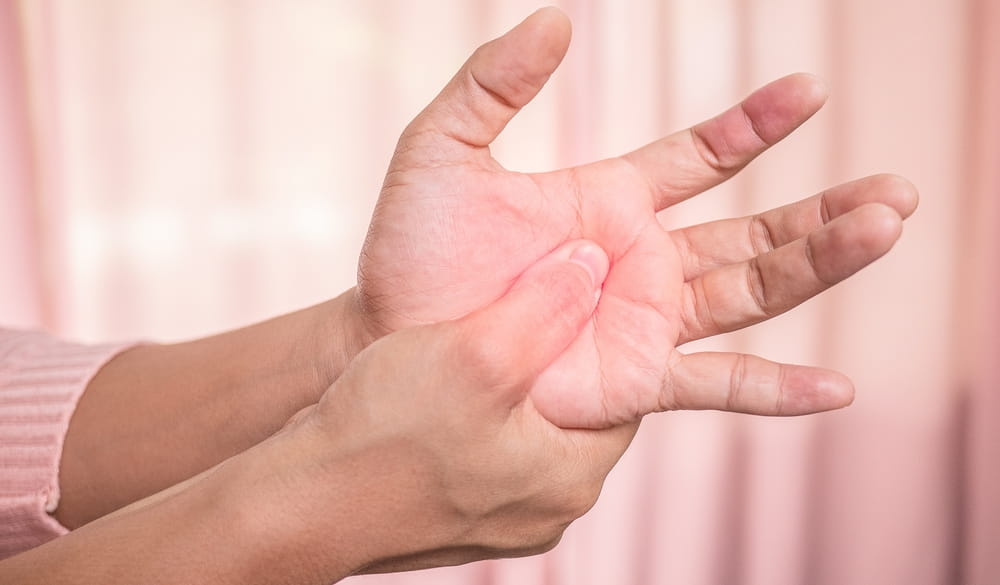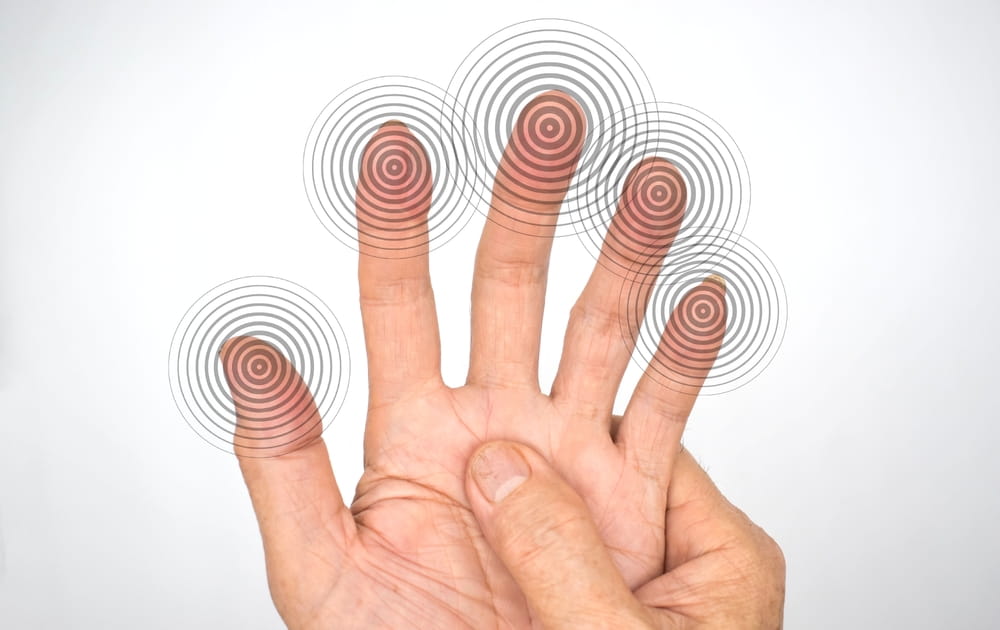
A hand that suddenly “falls asleep” after resting in an awkward position is usually not a reason for concern. When numbness or tingling keeps returning, lasts longer than expected, or begins interfering with grip and coordination, however, it may indicate irritation somewhere along a nerve pathway.
The location and timing of the sensation can provide useful clues. Symptoms affecting the thumb and first few fingers may have a different source than tingling concentrated in the ring and little fingers. Some people experience symptoms only at night, while others notice them when bending an elbow, using a computer, driving, or moving the neck.
Lone Star Orthopaedic and Spine Specialists, PLLC evaluates hand and upper-extremity symptoms for people throughout Mansfield, Fort Worth, Burleson, and surrounding North Texas communities. Understanding where nerve symptoms begin is an important step toward identifying the condition affecting the hand.
Why Nerve Problems Cause Tingling
Nerves carry sensory information between the brain and the rest of the body. They allow the hands to detect temperature, pressure, texture, pain, and the position of the fingers. Nerves also carry signals that activate the muscles used for gripping and fine motor tasks.
When a nerve is compressed, irritated, stretched, or otherwise disrupted, its signals may not travel normally. This can produce numbness, tingling, burning, electric sensations, pain, or weakness.
The problem does not always begin where the symptoms are felt. A nerve supplying the hand can become irritated at the wrist, elbow, forearm, or neck. For this reason, a careful examination may include several areas of the upper extremity rather than focusing only on the fingers.
Carpal Tunnel Syndrome
Carpal tunnel syndrome is one of the most common causes of hand numbness. It develops when the median nerve becomes compressed as it passes through a narrow space in the wrist called the carpal tunnel.
The median nerve supplies sensation to the thumb, index finger, middle finger, and part of the ring finger. Symptoms commonly appear in this distribution, although some people describe the entire hand as numb.
Tingling may be especially noticeable at night or while driving, holding a phone, typing, or performing repetitive wrist movements. Some people wake up needing to shake or reposition the hand. As the condition progresses, weakness may develop in the muscles at the base of the thumb, making it more difficult to grip objects or perform precise tasks.
Through specialized wrist and hand care, the pattern of symptoms can be evaluated to determine whether the median nerve or another structure may be involved.
Ulnar Nerve Compression at the Elbow
The ulnar nerve travels behind the inner side of the elbow through an area commonly called the cubital tunnel. It is the nerve responsible for the familiar shock-like sensation that occurs after hitting the “funny bone.”
Compression or irritation of this nerve can cause tingling and numbness in the little finger and the adjacent half of the ring finger. Symptoms may worsen when the elbow remains bent for a prolonged period, such as while sleeping, talking on the phone, driving, or leaning on a desk.
More advanced ulnar nerve compression can affect grip strength and finger coordination. A person may have difficulty opening containers, holding small objects, typing, or separating the fingers.
Because the nerve travels from the neck to the hand, an evaluation may also consider whether the symptoms originate at the wrist, elbow, or farther up the arm.
A Pinched Nerve in the Neck
Hand tingling does not always begin in the hand or wrist. Nerve roots leaving the cervical spine travel through the shoulder and arm before reaching the hand. When one of these roots becomes compressed or inflamed, the condition is known as cervical radiculopathy.
Possible causes include a herniated disc, age-related changes in the cervical spine, or narrowing around the opening where a nerve exits. Symptoms may include neck pain that travels into the shoulder or arm, numbness in certain fingers, weakness, or an electric sensation triggered by particular neck movements.
Some people experience noticeable hand symptoms without severe neck pain. The distribution of numbness, changes in reflexes, and specific areas of weakness can help distinguish a cervical nerve problem from compression at the wrist or elbow.
Information about back and spine conditions can help patients understand why an issue in the neck may produce symptoms much farther down the arm.
Other Conditions That May Affect Sensation
Numbness and tingling may also be related to conditions outside the most common nerve-compression syndromes.
Arthritis, swelling, a cyst, or a previous injury can reduce the space surrounding a nerve. Fractures or dislocations may injure nearby nerve tissue, while scar tissue can sometimes affect nerve mobility after healing.
Peripheral neuropathy can cause altered sensation in both hands, often in a more widespread or symmetrical pattern. It may be associated with diabetes, certain medications, nutritional deficiencies, or other medical conditions. Circulation problems can also cause changes in hand sensation, although they may be accompanied by unusual color changes, temperature differences, or swelling.
Because so many conditions can produce similar sensations, repeated numbness should not automatically be assumed to result from carpal tunnel syndrome.
Patterns That Can Help Identify the Source
The way symptoms develop often provides useful information during an evaluation. Important details include:
- Which fingers feel numb or tingly
- Whether one or both hands are affected
- Whether symptoms occur mainly at night
- Which wrist, elbow, or neck positions trigger them
- Whether shaking or repositioning the hand provides relief
- Whether numbness is accompanied by pain or burning
- Whether grip strength or coordination has changed
- Whether there was a recent fall, impact, or other injury
Keeping track of these patterns can make it easier to describe the problem clearly. Symptoms may still overlap, so a pattern alone cannot confirm a diagnosis.
When Weakness Becomes an Important Sign
Temporary tingling without weakness may reflect mild or intermittent nerve irritation. Weakness, dropping objects, difficulty pinching, or loss of finger coordination can indicate that the nerve’s motor function is being affected.
Long-standing compression can sometimes lead to muscle wasting. In carpal tunnel syndrome, this may be visible near the base of the thumb. With significant ulnar nerve compression, changes may develop in the small muscles responsible for fine finger control.
Nerve tissue can recover slowly, and severe or prolonged compression may not fully resolve even after pressure is removed. This is one reason persistent symptoms and progressive weakness deserve timely evaluation.
What an Examination May Include
An orthopaedic examination typically begins with questions about the location, duration, and triggers of the symptoms. The clinician may evaluate sensation, grip strength, finger movement, reflexes, wrist and elbow positioning, and neck motion.
Certain physical tests may temporarily reproduce tingling by placing gentle pressure or tension on a nerve. These findings are considered together rather than being used alone to make a diagnosis.
Nerve conduction studies and electromyography may be recommended when the source or severity of the symptoms is unclear. These tests measure how signals travel through nerves and how muscles respond. X-rays, ultrasound, or MRI may also be used in selected cases to assess bones, joints, soft tissues, or the cervical spine.
Treatment Depends on Where the Nerve Is Irritated
There is no single treatment for every person with hand numbness. Care depends on which nerve is involved, where the irritation occurs, how severe the symptoms are, and whether weakness or muscle changes have developed.
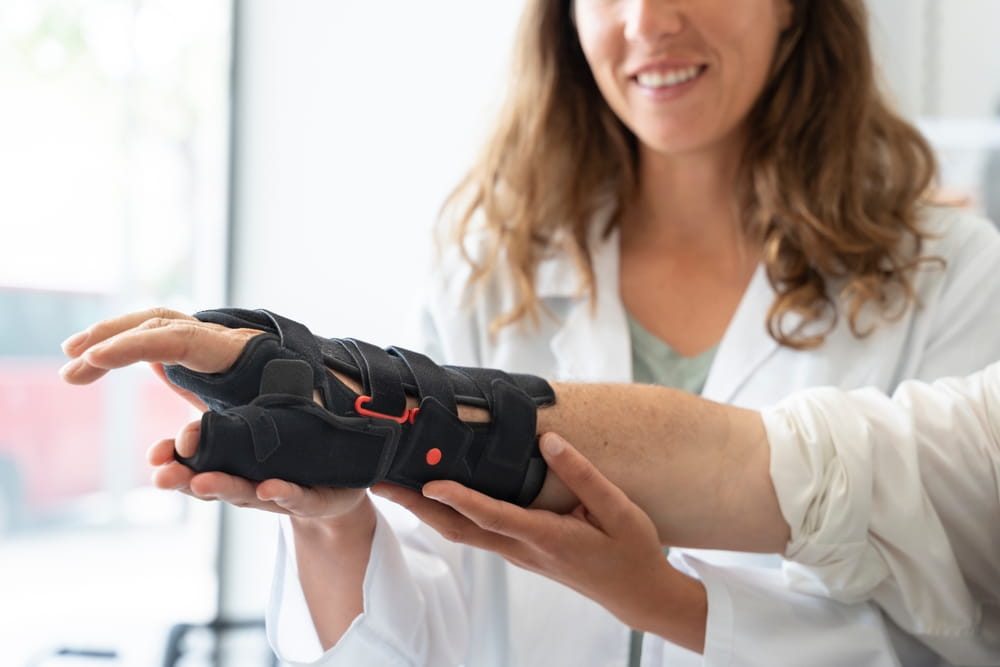
Mild nerve compression may initially be managed by reducing aggravating positions or activities. A wrist splint may help some people with nighttime carpal tunnel symptoms, while avoiding prolonged elbow bending or pressure may reduce irritation of the ulnar nerve.
Physical therapy may be appropriate when treatment needs to address mobility, posture, strength, nerve movement, or mechanics throughout the neck and upper extremity. Medication or an injection may be considered for certain conditions.
Surgery may be recommended when compression is severe, weakness is progressing, diagnostic testing shows significant nerve damage, or appropriate nonsurgical care has not relieved the symptoms. The procedure used depends on the nerve and the location of the compression.
When Hand Numbness Needs Prompt Attention
Hand tingling that occurs briefly after sleeping on an arm may resolve once the position changes. Medical evaluation becomes more important when numbness is persistent, frequently recurring, spreading, or affecting daily function.
Prompt assessment is also appropriate when symptoms begin after an injury or are accompanied by increasing weakness, severe neck or arm pain, significant swelling, loss of coordination, or visible muscle changes.
Sudden numbness involving an entire arm, particularly when it occurs with facial drooping, difficulty speaking, confusion, dizziness, or sudden weakness, may signal a medical emergency. Emergency services should be contacted immediately rather than waiting for an orthopaedic appointment.
Following the Clues Along the Nerve Pathway
Hand numbness can originate at the wrist, elbow, neck, or another point along the nerve pathway. The affected fingers, triggering positions, accompanying pain, and presence of weakness can help narrow the possibilities, but similar symptoms may occur with several different conditions.
Ignoring persistent tingling may allow nerve compression to progress. A focused evaluation can identify where normal nerve signaling is being interrupted and guide treatment based on the underlying cause rather than the sensation alone.
For individuals in Mansfield, Fort Worth, Burleson, and across the surrounding Texas region, Lone Star Orthopaedic and Spine Specialists, PLLC provides evaluation of hand, wrist, elbow, and nerve-related concerns. Recognizing changes in sensation early can help protect hand strength, coordination, and everyday function.
Sources
Erickson, M., Lawrence, M., Lazinski, M. J., Scott, K., & Martin, R. R. (2026). Hand pain and sensory deficits: Carpal tunnel syndrome revision 2026. Journal of Orthopaedic & Sports Physical Therapy.
Ferguson, D. P., & Grewal, R. (2022). Cubital tunnel syndrome: Review of diagnosis and management. Hand Surgery and Rehabilitation.
Iyer, S., & Kim, H. J. (2016). Cervical radiculopathy. Current Reviews in Musculoskeletal Medicine.