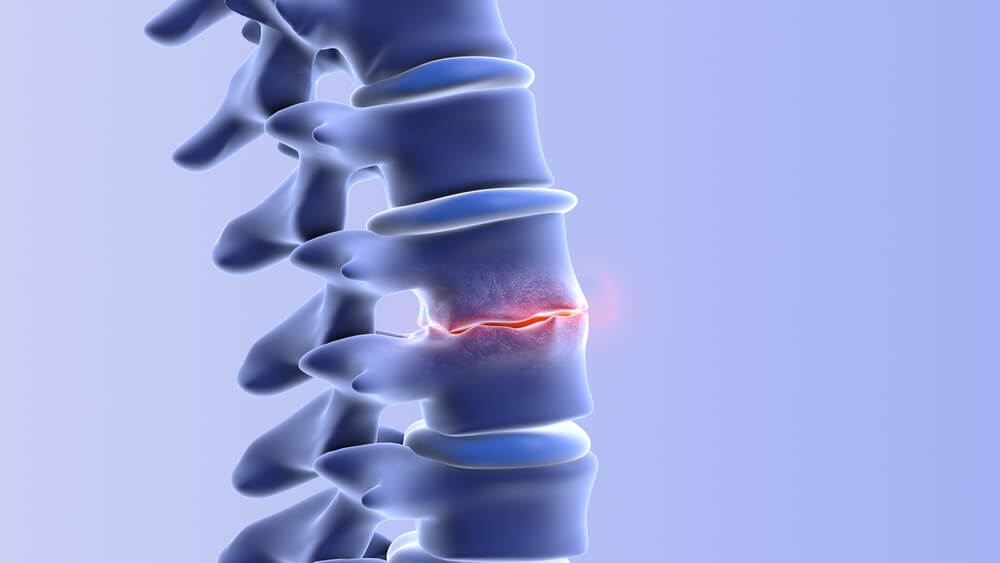
Despite its name, Degenerative Disc Disease (DDD) is not actually a “disease,” but a condition of the gradual breakdown of the spinal discs that cushion the bones in your neck. These soft, water-filled discs between your spinal vertebrae act like shock absorbers, allowing you to turn, bend, and move your head comfortably.
Over time, those discs can dry out, flatten, crack, or lose flexibility, causing painful friction, inflammation, stiffness, and sometimes nerve compression. As DDD progresses, these discs lose their height and elasticity, which can lead to bones rubbing together or nerves becoming compressed. This wear and tear are a common part of aging, but it can cause chronic pain in nearby joints, nerves, and even the spinal cord.
Is occasional stiffness in your neck now causing you pain, headaches, or tingling and weakness in your arms? Degenerative Disc Disease (DDD) can make simple movements frustrating. Schedule an appointment with one of our specialists to explore your available treatment options before the problem worsens.
Most patients experience temporary relief from conservative measures; these non-surgical treatments aim to manage symptoms rather than reverse hip joint damage. Once the physician treats the source of inflammation and instability, most patients experience significant improvement. Treatment stops the pain, restores mobility, and improves the quality of life.
The information provided on www.lonestar-ortho.net is intended for general informational and educational purposes only. The content on this website is presented in summary form, general in nature, and should not be considered medical advice, diagnosis, or treatment recommendations.
The materials and information provided on this website are not intended to replace professional medical advice, care, or consultation with a qualified healthcare provider. Always seek the advice of your physician or another qualified healthcare professional regarding any medical condition, treatment option, or health concern.
Do not ignore professional medical advice or delay seeking care because of something you read on this website. If you think you may have a medical emergency, call 911 or seek immediate medical attention.
The earlier a medical professional identifies Degenerative Disc Disease, the more treatment options you typically have available. Our specialists are ready to create a personalized roadmap for your recovery.