Posterior cervical laminectomy is a spinal decompression surgery performed through the back of the neck. When the surgeon removes the “roof” (lamina) of your spinal canal, your nerves get the breathing room they need, and spinal cord pressure is relieved.
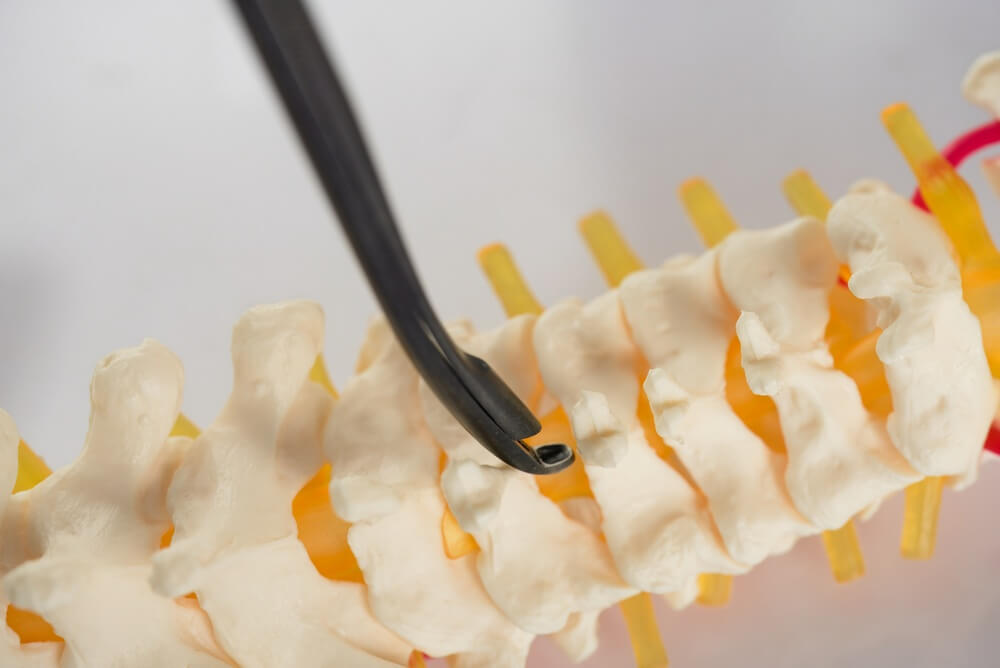
Arm and neck pain and weakness can disrupt your daily routine and short-circuit your active lifestyle. A spine evaluation may help identify the source of the problem and determine whether a Posterior Cervical Laminectomy is best for you.
Disclaimer:
*Once spinal cord compression with cervical myelopathy is determined, conservative measures given by the provider only treat symptoms. We will always explore conservative treatments before recommending surgical procedures like Posterior Cervical Laminectomy.
In a posterior cervical laminectomy, the surgical team gives general anesthesia to the patient and asks the patient to lie face down to give the surgeon access to the back of the neck. A typical surgery lasts 1-3 hours, and most patients have a 1–2-night hospital stay and experience relief from nerve pain and improved neurological function.
The surgeon makes a small incision in the back of the neck. Muscles are carefully moved aside to access the spine. To begin the decompression, the surgeon removes the lamina, bone spurs, thickened ligaments, or any other compressive tissue that puts pressure on the nerves. Removing this bone creates additional space for the spinal cord and nerves, which are no longer pinched against the bone. In many cases, bone grafts and metal rods/screws are used to fix the vertebrae together, creating a solid bone mass to ensure neck stability after the bone is removed. The surgeon places back the muscle layers, and the skin is closed with stitches or staples.
Walking is encouraged early, often the same day or the next day. It is the best “medicine” for your recovery, with patients gradually increasing their distance and endurance. When arriving home, you must avoid lifting anything heavier than 8 pounds and no overhead reaching. Only light household activity is allowed within the first few days of surgery.
Posterior Cervical Laminectomy is designed to provide long-term decompression of the spinal cord and nerves. Since the bone is entirely removed, it cannot grow back to compress the cord in the same spot, but if a fusion was not performed, there is a risk of post-laminectomy kyphosis (the neck bowing forward), which may require a second surgery later. If a fusion was performed, it is rare to need surgery at the same level, but adjacent-level disease (problems with segments above or below) can occur over several years due to natural aging.
The incision made by the surgeon is along the midline in the back of the neck. This incision is kept as small as possible and typically heals as a thin linear scar that hair can easily conceal.
The information provided on www.lonestar-ortho.net is intended for general informational and educational purposes only. The content on this website is presented in summary form, general in nature, and should not be considered medical advice, diagnosis, or treatment recommendations.
The materials and information provided on this website are not intended to replace professional medical advice, care, or consultation with a qualified healthcare provider. Always seek the advice of your physician or another qualified healthcare professional regarding any medical condition, treatment option, or health concern.
Do not ignore professional medical advice or delay seeking care because of something you read on this website. If you think you may have a medical emergency, call 911 or seek immediate medical attention.
Neck pain, spinal cord compression, and progressive neurological symptoms can significantly affect your independence and quality of life. A posterior cervical laminectomy protects your spinal cord, stabilizes your function, and restores confidence in your movement. Prompt treatment can make a meaningful difference in long-term recovery.