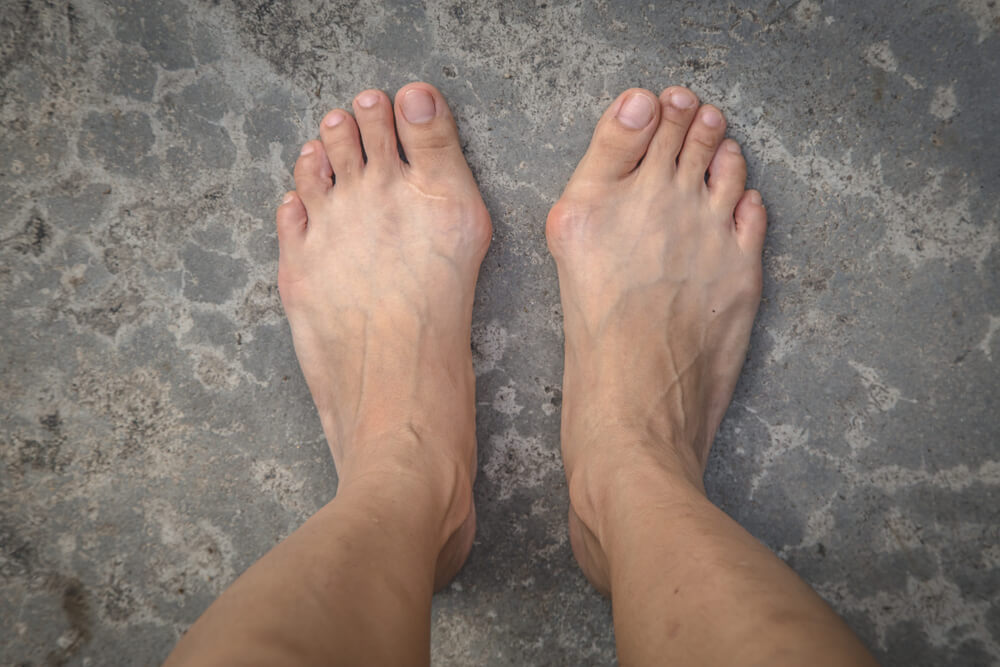
What is Scarf and Austin Osteotomy?

Who is an ideal candidate for this treatment?

  • Candidates will have mild to moderate deformity (Austin) or moderate to severe deformity (Scarf).
  • The deformity is progressing, causing “hammertoes” or pain in the ball of the foot.
  • You experience persistent foot and/or bunion pain that interferes with daily activities (walking, exercising, or standing for work).
  • Conservative treatments (wider shoes, orthotics, padding, etc.) have failed to provide relief.

Is bunion pain reducing the quality of life? The Scarf/Austin osteotomy offers a long-term solution that realigns your foot, relieves pain, and restores function.
Book Now

Do I need help? Possible Signs

  • You may be experiencing redness, swelling, or irritation from shoes.
  • Your big toe is visibly drifting toward your second toe, and the base of your big toe is consistently in pain.
  • A visible bump that is worsening over time, which is often associated with chronic redness, calluses, or sores on the “bump.”
  • Limited movement or stiffness in the joint has reduced or stopped you from engaging in certain activities.

What to expect before surgery?

  • Compassionate Care
  • Thorough Examination & Personalized Treatment Plan
  • Patient’s Goals Discussed & Straight Answers to Difficult Questions
  • Support You Can Count On

Non-Surgical options

  • Footwear changes, including wider and more supportive footwear. This can include custom orthotic inserts, padding, and/or bunion splints) designed to realign pressure.
  • Temporarily replacing high-impact/sports activities with lower-impact ones.
  • Anti-inflammatory medications to manage general inflammation.
  • Steroid injections to manage acute inflammation (though this does not fix the bone).

Definition of Treatments:

Scarf Osteotomy
  • Used for moderate to more severe bunions.
  • A Z-shaped cut along the first metatarsal bone allows for greater correction.
  • Bone is repositioned and stabilized with tiny, medical-grade, permanent screws.
  • Provides versatile and strong structural correction and stability.
Austin Osteotomy (Chevron Osteotomy)
  • Used for mild to moderate bunions.
  • A V-shaped cut is made near the head of the first metatarsal.
  • The bone is shifted into proper alignment.
  • Secured with tiny, medical-grade screws or fixation.

FAQs

Mobility

Most patients walk in a surgical boot or shoe that allows for protected weight-bearing almost immediately after surgery.

Risk of Recurrence

While no surgery has a 0% recurrence rate, Austin and Scarf Osteotomy significantly reduces the risk of the bunion returning. Recurrence is minimized if the patient is a non-smoker and follows post-op care instructions, including footwear and activity recommendations.

Cosmetic Consideration

Both procedures improve the foot’s appearance, resulting in a much straighter and narrower foot that fits more comfortably in standard shoes.

Recovery Timeline

  • 1–2: limited activity with walking boot/shoe with periods of rest, elevation, and ice.
  • 2–6 weeks: Gradual return to walking in supportive footwear
  • 6–12 weeks: Physical therapy, return to normal footwear, and increased activity and mobility
  • Complete recovery can take several months, depending on severity.

Considerations/Risks

Typical
  • Swelling and stiffness in the big toe joint make it less flexible than before. This is managed through physical therapy.
  • Pain, bleeding, bruising, and/or infection can occur at the incision site early in the healing process.
  • Prolonged Swelling: Minor swelling can linger for 3–6 months, especially after a long day on your feet.
  • Nerve irritation leads to temporary “patches” of numbness on the side of the toe.
  • Scar sensitivity and irritation.
Atypical
  • Overcorrection or (Hallux Varus) can occur when the big toe starts to point too far away from the second toe, opposite of a bunion.
  • Hardware Irritation occurs in 5–10% of patients who can feel the small screws used to hold the bone. If they become annoying, a surgeon can remove them even after the bone has been completely healed.
  • Transfer Metatarsalgia: Because your foot mechanics have changed, you might temporarily feel new pressure or pain under the second toe as your foot relearns how to walk.
  • Malunion or Non-union: This is when the bone heals in the wrong position or fails to knit back together. This is more common in smokers or those with poorly controlled diabetes.
  • Troughing (Specific to Scarf) occurs in rare cases, where the two halves of the bone can “telescope” or sink into each other, which may require adjustment.

Why Choose Lone Star?

  • Board-Certified Orthopaedic Surgeons with Exceptional Expertise
  • Advanced Surgical Techniques and Technology
  • Reputation for Patient-Centered Care and Results
  • Collaborative Care Team Approach

Disclaimers:

  • The information provided on www.lonestar-ortho.net is intended for general informational and educational purposes only. The content on this website is presented in summary form, general in nature, and should not be considered medical advice, diagnosis, or treatment recommendations.

  • The materials and information provided on this website are not intended to replace professional medical advice, care, or consultation with a qualified healthcare provider. Always seek the advice of your physician or another qualified healthcare professional regarding any medical condition, treatment option, or health concern.

  • Do not ignore professional medical advice or delay seeking care because of something you read on this website. If you think you may have a medical emergency, call 911 or seek immediate medical attention.

Book Your Appointment Today

You have spent enough “managing” the pain and ache a bunion can create. Get a plan from our medical providers and start your path to life without foot pain.