Posterior Cervical Laminoplasty is a surgical spinal decompression surgery performed from the back of the neck, to preserve motion in the neck, and relieve spinal cord compression cervical myelopathy by widening the spinal canal by hinging (like opening a door) the lamina bone to create more space, without removing it entirely.
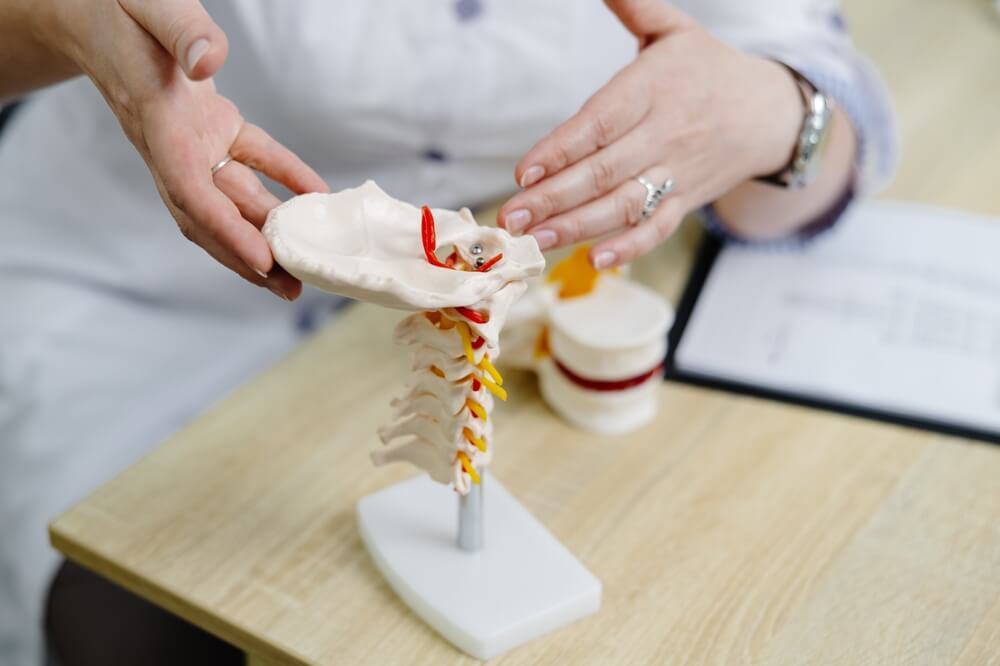
When walking becomes unsteady, hands feel clumsy, or numbness creeps into your arms, it may be more than “just aging.” If spinal pressure in your neck begins to affect your balance, strength, coordination, or daily comfort, it is time to see if a Posterior Cervical Laminoplasty is right for you. Book Now and take the first step toward returning to an active lifestyle.
The procedure typically takes 1-3 hours to complete, with a hospital stay of 1–3 days. Your surgeon can give you the best time estimate for your procedure. During a Posterior Cervical Laminoplasty, the patient is placed under general anesthesia and positioned face down, and a 3-5-inch incision is made at the center of the back of the neck.
There are two techniques the surgeon can use in a laminoplasty. The first is called an open-door technique. Also known as a hinge, it is created when your surgeon makes a groove on one side of the lamina (the bony arch of the vertebrae) and then cuts through the other side of the lamina. This creates a “hinge”, and the bone is swung open like a door. The surgeon may choose to use a French door technique. This is where the surgeon cuts the lamina down the middle. The bone opens out like a pair of double doors. In both techniques, the surgeon may insert small titanium plates/bone grafts, screws, and bone spacers/wedges to keep the lamina “door” open, permanently widening the spinal canal to relieve pressure on the spinal cord. This does not fuse bones, but each vertebral level gets its own plate to maintain your current mobility. The surgeon may perform Posterior Cervical Foraminotomy after a laminoplasty.
Once complete, the surgeon will carefully move muscles, ligaments, and skin back into place and close the incision. In some cases, the surgeon will add a neck collar for a brief time to limit motion and reduce irritation.
Wound-care instructions should be followed carefully, and patients should treat the surgical site like an injury. Focus on getting plenty of rest and no strenuous activities until your healthcare provider clears you. A soft collar may be worn if the surgeon approves it. The first few days after surgery, household activities can be challenging. Many patients have someone to help around the house until they are well enough to get around on their own.
Exercise should begin with short, frequent, and gentle walks on the day of or the day after surgery. Walking improves circulation, reduces stiffness, and supports recovery. Once cleared by the doctor, low-impact cardio (stationary bike) usually begins around week six, while high-impact sports often require 6 months or more of healing.
One of the greatest benefits of posterior cervical laminoplasty is its low recurrence rate. The surgeon permanently widened the spinal canal, and it is extremely rare for the same area to cause compression again. However, “adjacent segment disease” can occur if the levels above or below the surgery site develop wear and tear over time. The progression of degenerative changes can occur over time, with long-term neurologic deterioration being highly uncommon.
The incision made by the surgeon is a midline incision along the back of the neck. Over 12 months, the 3–5-inch vertical scar typically fades to a thin, faint line that patients can easily hide with hair or a shirt collar.
The information provided on www.lonestar-ortho.net is intended for general informational and educational purposes only. The content on this website is presented in summary form, general in nature, and should not be considered medical advice, diagnosis, or treatment recommendations.
The materials and information provided on this website are not intended to replace professional medical advice, care, or consultation with a qualified healthcare provider. Always seek the advice of your physician or another qualified healthcare professional regarding any medical condition, treatment option, or health concern.
Do not ignore professional medical advice or delay seeking care because of something you read on this website. If you think you may have a medical emergency, call 911 or seek immediate medical attention.
Spinal compression is a progressive issue. The goal of surgery is to stop the clock and prevent further paralysis or loss of function. Early evaluation and treatment may help protect neurological function and improve quality of life. Schedule a consultation to determine whether posterior cervical laminoplasty is right for you.