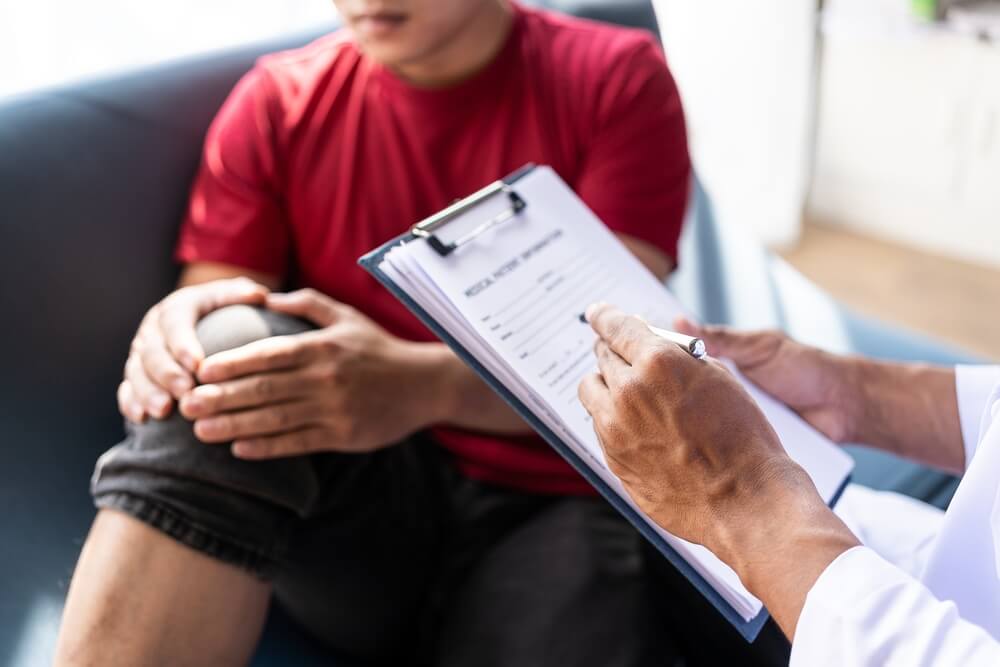
Partial knee replacement candidates typically will have pain that is strictly isolated to the medial (inside), lateral (outside), or patellofemoral (under kneecap) compartment. Also, their Anterior Cruciate Ligament (ACL) is intact and healthy with a relatively good range of motion; limited arthritis that has not spread.
Get Back on Your Feet.
Book your knee evaluation by calling
(817) 926-BONE (2663)
The Incision & Length of Surgery
Partial: A “minimally invasive” approach. The incision is smaller (3–5 inches), only accessing the damaged side.
Cartilage and Bone Removal
Partial: A very small amount of bone and cartilage is removed, and it is only a single affected compartment (usually the inner or outer side)
Hardware
Partial: The surgeon will likely use two small metal pieces for just the impacted area, not the whole knee. A thin plastic disc is used to patch one small area, making it a low-profile fix.
Alignment
Partial – Often, patients maintain their natural leg shape. The goal is to target a specific area of the knee, replacing the damaged parts while preserving the healthy ones.
For Partial Knee Replacement, patients express a more “natural feel” and better range of motion because often the original ACL and PCL ligaments are kept intact. Patients of partial knee replacements can return to normal walking and activities within 3 to 6 weeks. High-impact activities such as running or jumping may be discouraged to protect the longevity of the implant; however, patients can usually return to low-impact activities without pain once healing is complete.
For partial knee replacements, a small risk, less than 10% say arthritis develops later.
Partial knee replacements use a “mini” incision, only 3-6 inches, which results in significantly less scarring.
Partial knee replacements typically have half of the recovery time of a total knee replacement. Partial knee replacement is often an outpatient procedure, meaning you’re usually walking (with a cane/walker) within a few hours.
Keep moving with regular physical therapy exercises. Icing, elevate, and take prescribed medications to control swelling and pain in the first month. Avoid high-impact sports or activities that stress the knee and could cause complications.
The information provided on www.lonestar-ortho.net is intended for general informational and educational purposes only. The content on this website is presented in summary form, general in nature, and should not be considered medical advice, diagnosis, or treatment recommendations.
The materials and information provided on this website are not intended to replace professional medical advice, care, or consultation with a qualified healthcare provider. Always seek the advice of your physician or another qualified healthcare professional regarding any medical condition, treatment option, or health concern.
Do not ignore professional medical advice or delay seeking care because of something you read on this website. If you think you may have a medical emergency, call 911 or seek immediate medical attention.
Are you missing out on the moments that matter? Call (817) 926-BONE (2663) and explore your options with our orthopaedic specialists. We can help you walk again without pain.