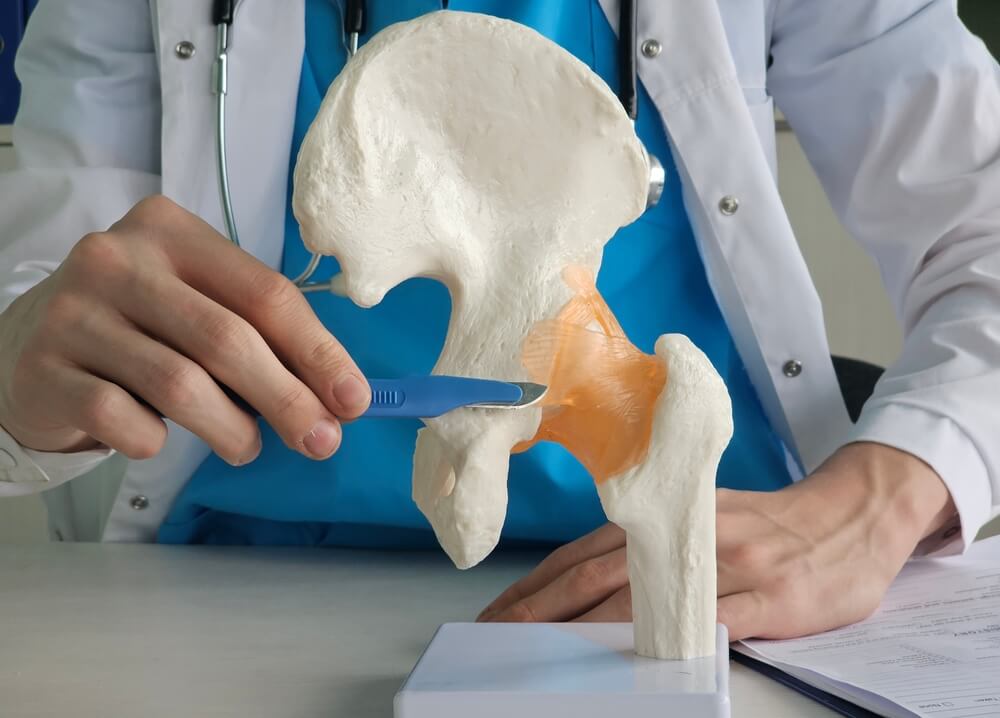
What is Partial Hip Replacement or Hemiarthroplasty?

Who is an ideal candidate for this treatment?

  • Reduced quality of life due to significant pain and mobility limitation.
  • Imaging confirms joint damage isolated to the femoral head (ball) only.
  • Typically, for older patients who have experienced hip fractures.
  • Partial Hip Replacement may be a good option for patients who may not be able to tolerate a longer surgery.

Do I need help? Possible Signs

  • The sudden onset of groin or hip pain following an injury or fall.
  • Difficulty walking or standing, including an inability to bear weight immediately after the injury.

Get a clear diagnosis, understand your options, and build a plan that gets you moving again with confidence and pain-free.

Book your appointment by calling (817) 926-BONE (2663)

What to expect before surgery?

  • Compassionate Care
  • Thorough Examination & Personalized Treatment Plan
  • Patient’s Goals Discussed & Straight Answers to Difficult Questions
  • Support You Can Count On

Non-Surgical options

Partial hip replacement is often not elective, since it is commonly required after a fracture, limiting non-surgical options.

  • Targeted physical therapy to strengthen the muscles supporting the joint.
  • Modifying activity by swapping high-impact (running) for low-impact (swimming).
  • The use of assistive devices (cane/walker)
  • NSAIDs: Over-the-counter anti-inflammatory medications
  • Injections: Corticosteroids or hyaluronic acid to reduce inflammation.

Definition of Treatments:

Partial Hip Replacement (Hemiarthroplasty) is unlike a total hip replacement, as only the femoral head (the ball) is replaced. The surgery is faster as the natural socket is preserved and left intact. This is commonly performed in emergency settings rather than for chronic arthritis.

FAQs

Mobility

The partial hip replacement offers good function and mobility. It may offer slightly less mobility over time when compared to total hip replacement, due to the new ball wearing against the original socket.

Risk of Recurrence

There is a higher chance of recurrence due to socket wear over time.

Cosmetic Consideration

A partial hip replacement usually has a slightly smaller incision than a total hip replacement, with most incisions for total or partial replacement being 4–6 inches, with over 90% of patients saying the long-term scar appearance is good or better.

Recovery Timeline

  • In the first 24-48 hours, patients often begin walking with a walker or crutches, and physical therapy begins to improve circulation and prevent stiffness. You’ll need help washing, dressing, and going to the bathroom.
  • In 1-3 weeks, most patients will transition from a walker to a cane, and walking will become easier. Most patients get stitches and staples removed and can get dressed and use the bathroom on their own. Physical therapy progresses more easily, allowing patients to advance quickly in strength training and range of motion exercises.
  • In 3-6 weeks, basic mobility without assistance is achieved, and a return to normal daily living activities. Most patients can begin driving, working at a desk job, and even light exercise by the sixth week.
  • In 6-8 weeks, most patients regain complete function. Physical therapy is almost completely done at home, with most patients achieving full recovery in two to four months.

Considerations/Risks

Typical
  • Typical risks include infection, blood clots, dislocation, and implant wear over time.
Atypical
  • Socket cartilage can be worn down over time and may eventually require conversion to total hip replacement.
  • Less optimal for highly active patients
  • Nerve or blood vessel injury (rare) resulting in temporary numbness or weakness in the leg.

Why Choose Lone Star?

  • Board-Certified Orthopaedic Surgeons with Exceptional Expertise
  • Advanced Surgical Techniques and Technology
  • Reputation for Patient-Centered Care and Results
  • Collaborative Care Team Approach

Disclaimers:

  • The information provided on www.lonestar-ortho.net is intended for general informational and educational purposes only. The content on this website is presented in summary form, general in nature, and should not be considered medical advice, diagnosis, or treatment recommendations.

  • The materials and information provided on this website are not intended to replace professional medical advice, care, or consultation with a qualified healthcare provider. Always seek the advice of your physician or another qualified healthcare professional regarding any medical condition, treatment option, or health concern.

  • Do not ignore professional medical advice or delay seeking care because of something you read on this website. If you think you may have a medical emergency, call 911 or seek immediate medical attention.

Book Your Appointment Today

A hip fracture changes everything in an instant, but what step you take next matters even more. Let us help you safely move again as quickly as possible.